
Saga is the kind of place most travelers skip.
Which is exactly why I wanted to ride there.
This was Episode 6 of Project 47, my solo motorcycle journey across all 47 prefectures of Japan. After the intensity of Nagasaki — the heat, the history, and the typhoon chase — Saga felt like stepping into a quieter side of the country.
Fewer people.
Smaller towns.
Empty roads and farmland stretching to the sea.
But sometimes the places that look quiet on the map end up being the most interesting.
Over three days riding across Saga Prefecture, I found hidden pottery villages, waterfalls tucked into the hills, wild camps beside rivers, rice terraces climbing the mountainsides, and a set of torii gates standing out in the ocean like something from a dream.
Below is the journey across Saga.
Day 1 — Into the Hidden Corners of Saga
Saga Prefecture sits a little off the radar.
Even many Japanese people struggle to name anything famous about it. Ask someone what’s in Saga and you’ll often get a shrug.
But those are the places I like the most.
Everyone goes to Tokyo.
Everyone goes to Kyoto.
Millions climb Mount Fuji.
But Saga? That’s where you find the spaces in between.
I left the hotel that morning reluctantly — air conditioning is hard to walk away from in the middle of a Kyushu summer — but the road was waiting.
My first destination was a small pottery village just a few kilometers away.
Saga isn’t huge, so the riding here is less about long distances and more about short hops between discoveries.
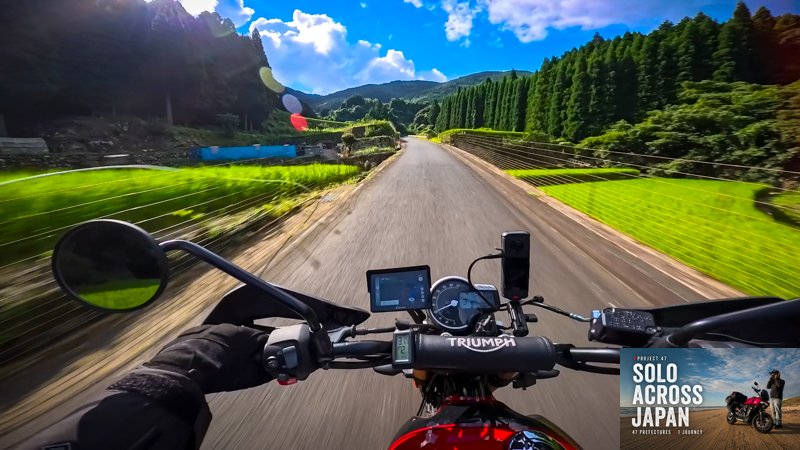
And the roads immediately felt promising.
Rice fields.
Mountain slopes.
Completely empty pavement.
Exactly what I was hoping for.
The Village of Secret Kilns — Okawachiyama
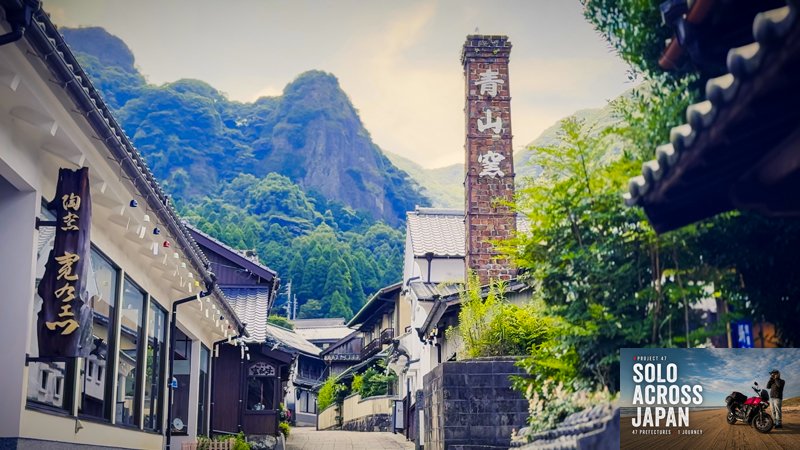
The road climbed into a quiet valley and suddenly the village appeared.
Whitewashed buildings.
Stone bridges.
A narrow mountain road running through the center.
This was Okawachiyama, often called the “Village of Secret Kilns.”
From 1675 until the late 1800s, this valley served as the official kiln site of the Nabeshima clan, producing porcelain exclusively for the shogunate, the Imperial Court, and powerful feudal lords.
For centuries the techniques used here were closely guarded.
Walking through the village today, you can still feel that heritage everywhere.
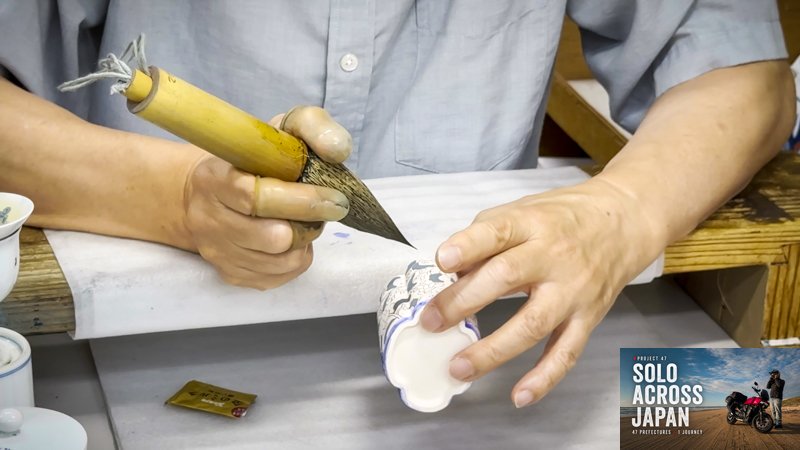
Small workshops line the street. Kilns sit tucked behind walls. Inside one shop I ended up speaking with the manager, who generously offered a tour of the workshop.
Watching the artists work was incredible.
Focused. Silent. Completely absorbed in the craft.
It’s the kind of place where the centuries feel very close.
Heading North — Coastlines and Empty Roads
Leaving the pottery village, I pointed the bike north.
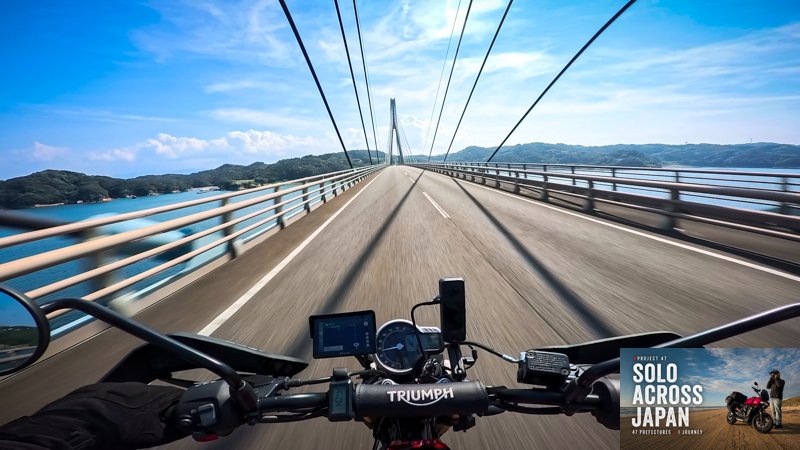
Saga quickly revealed itself as one of those prefectures where the roads just keep delivering.
Rolling hills.
Rice fields dropping toward the ocean.
Small villages with tiled roofs and narrow streets.
At one point I noticed something that always makes me smile in rural Japan.
A small statue beside a pedestrian crossing of a child raising their hand.
Children here still raise their hands when crossing the street to make themselves visible to drivers — and sometimes even bow to the cars that stop for them.
Little details like that remind you how different rural Japan can feel from the big cities.
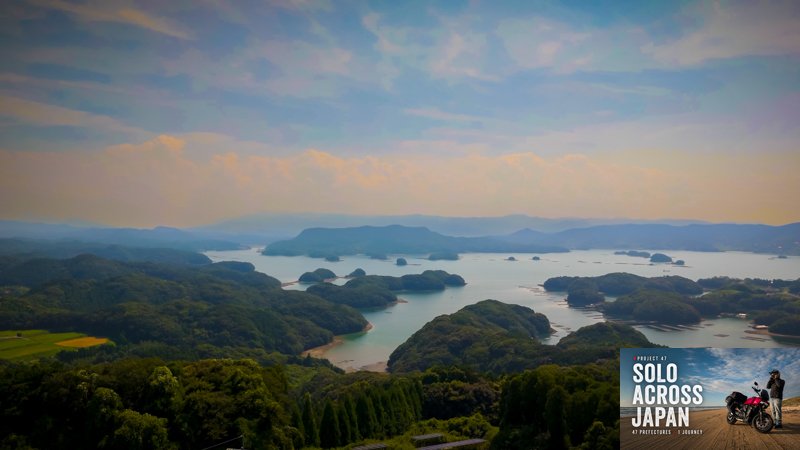
The ride eventually brought me close to the coast.
And the views were spectacular.
A Detour Into Nagasaki
At one point I realized I had accidentally crossed back into Nagasaki Prefecture.
Easy mistake in this part of Kyushu — borders weave through mountains and coastline in ways that can sneak up on you.
So I turned around and headed back into Saga with a simple plan for the rest of the day:
Find supplies.
Find a waterfall.
Find somewhere to camp.
Odaki Falls and the Search for Camp
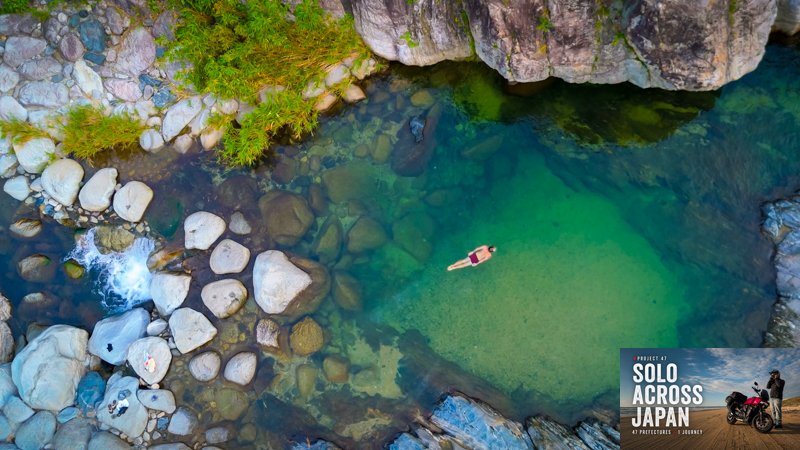
The waterfall I found wasn’t huge.
But after a long hot ride, it didn’t need to be.
Odaki Falls sits right beside the road, dropping through a narrow gorge surrounded by thick forest. The sound of the water alone made it worth stopping.
After cooling off there for a few minutes, I continued toward what I hoped would be a campsite.
The first option was closed.
Apparently too many visitors had left trash behind, and the local township had shut it down.
Unfortunately that happens more often than it should.
So it was time for Plan B.
Eventually I found a simple parking area overlooking the ocean.
Not exactly a traditional campsite, but good enough.
Tent up beside the bike.
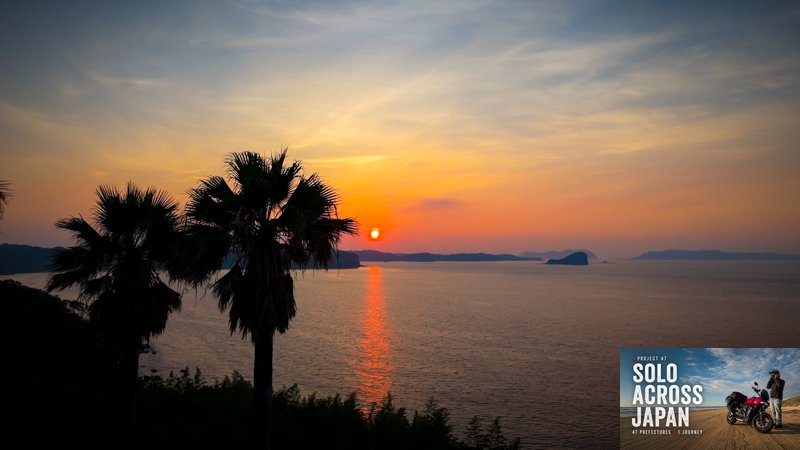
Sun dropping over the sea.
And the first night in Saga wrapped up perfectly.
Day 2 — Cliffs, Caves and Karatsu Castle
Morning in Saga was spectacular.
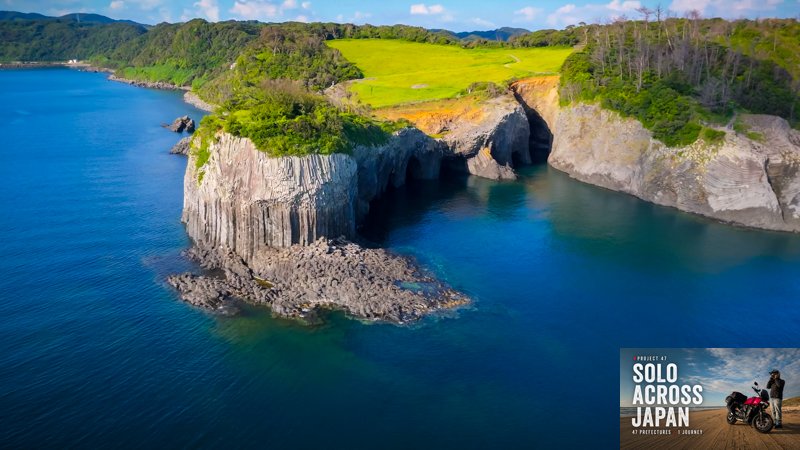
The campsite sat near the cliffs of Nanatsugama, a dramatic coastal formation carved by centuries of waves. From there I rode toward Karatsu along some of the most scenic roads in the prefecture.
Mountains on one side.
Ocean on the other.
Rice fields stretching between them.
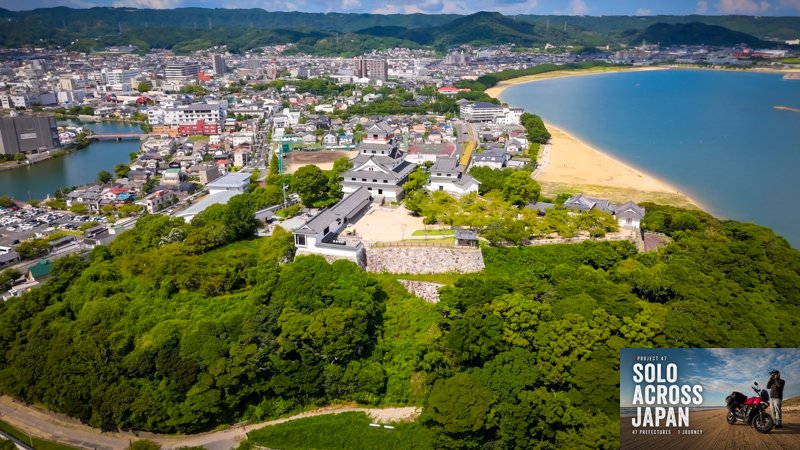
Karatsu itself is known for its castle.
Karatsu Castle — sometimes called “Dancing Crane Castle” — was originally constructed in the early 1600s. The version standing today is a reconstruction completed in 1966.
Inside, photography wasn’t allowed, but it’s one of the nicer castle interiors I’ve seen — and thankfully air conditioned.
After that stop I rode inland to visit another historic site.
Megane Bridge — The Stone Bridge of Sefuri
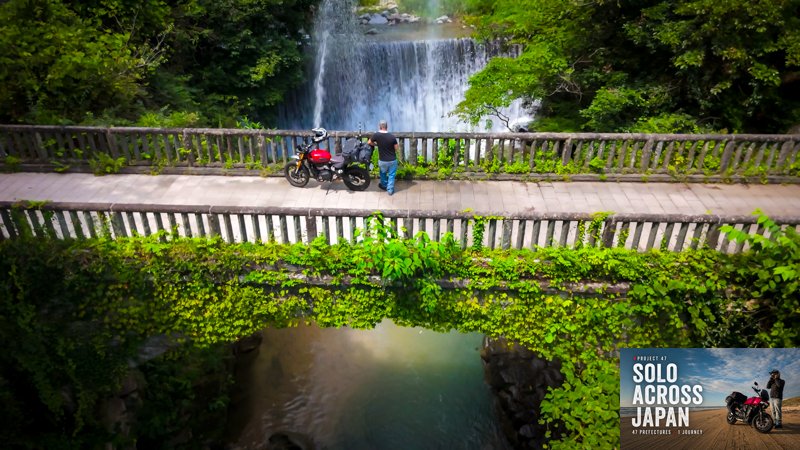
The Sefuri Megane Bridge dates back to 1891 and remains one of the region’s most important historic bridges.
Its name means “Glasses Bridge,” referring to the reflection of its two stone arches in the water below.
Add a small waterfall and dense greenery around the river, and it becomes one of those peaceful places that invites you to sit for a while.
Eventually hunger won.
After one restaurant closed just before I arrived, I finally found another open a few kilometers down the road.
Lunch at last.
Storm Riding and a Riverside Camp
After lunch I began searching for a campsite near a river.
Weekend crowds can make free camping spots tricky in Japan, so I headed deeper into the hills.
The sky was darkening.
You could feel the storm building in the air.
And then the rain arrived.
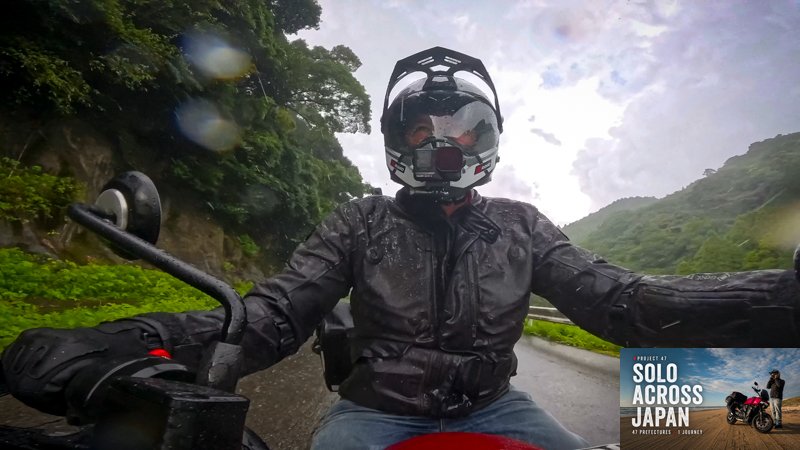
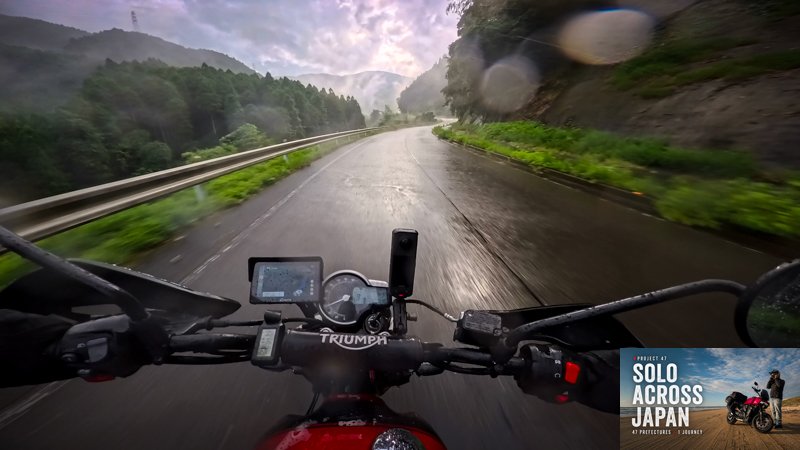
Within minutes the temperature dropped and the roads became slick — especially the grooved pavement sections that can feel like ice when wet.
But the ride through the rain was beautiful.
Mist rising off the mountains.
Forest roads shining with water.
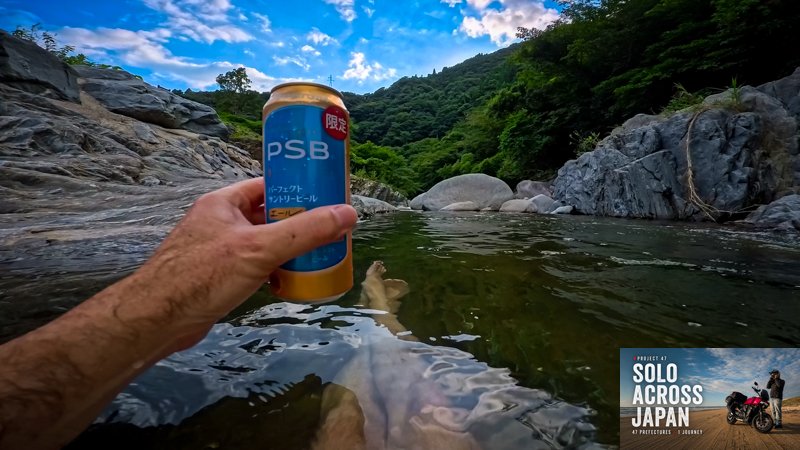
Eventually I reached a riverside campsite with plenty of space.
Tent up.
Storm rolling through.
And another perfect place to sleep.
Day 3 — Rice Terraces and a German Palace
The third day began in the mountains.
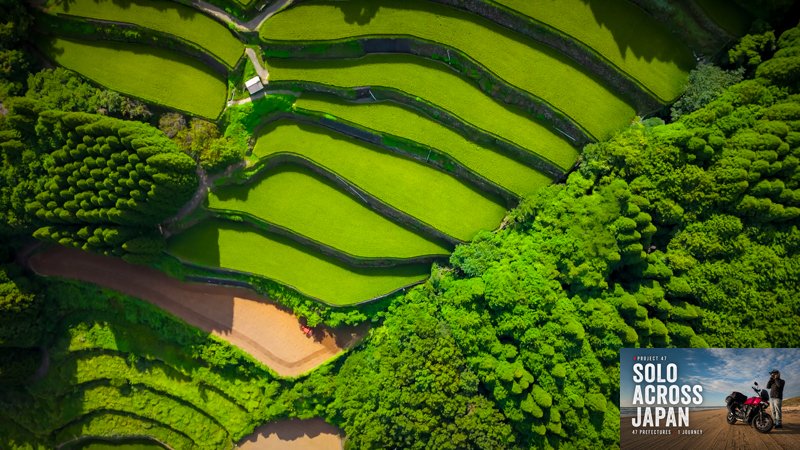
One of the highlights of the morning was the Warabino Rice Terraces — an incredible landscape of stone-walled fields climbing the hillsides.
It’s one of the largest terraced rice field systems in Japan and a reminder of just how much work has gone into shaping this landscape over generations.
From there I headed toward one of the strangest stops of the entire trip.
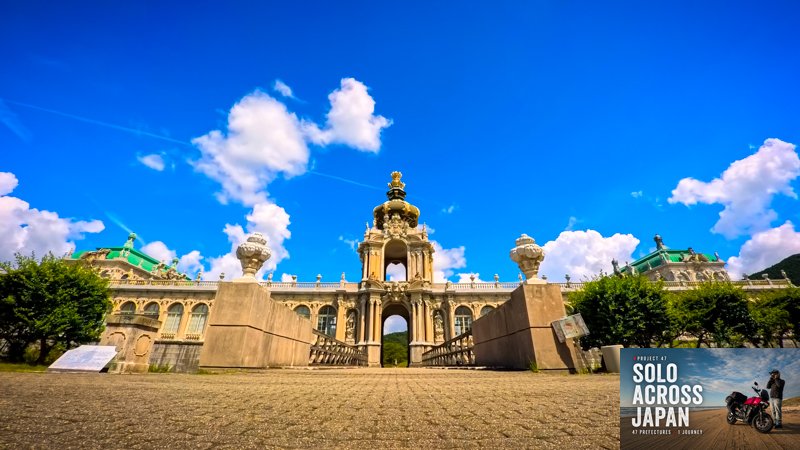
Arita Porcelain Park.
At first glance it looks like you’ve somehow ridden into Europe.
The centerpiece of the park is a full-scale replica of the Zwinger Palace from Dresden, Germany, built to celebrate the historic exchange between European porcelain and Japanese ceramics.
Seeing a German palace sitting in rural Saga was completely unexpected.
But fascinating.
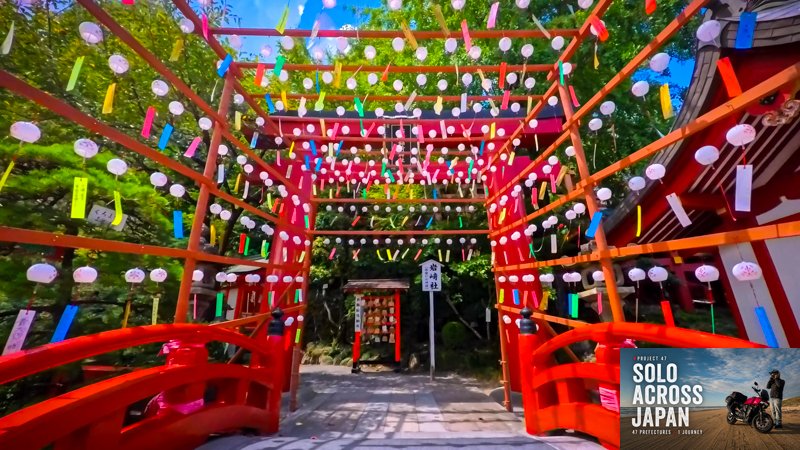
Yutoku Inari Shrine
After that strange detour, I headed somewhere much more traditionally Japanese.
Yutoku Inari Shrine.
Built in 1687, it’s considered the third most important Inari shrine in Japan and attracts millions of visitors each year.
The shrine rises dramatically along the mountainside, with vermilion gates climbing up the slope behind it.
The view from the upper levels is incredible.
A reminder of how seamlessly Japanese architecture blends with the landscape around it.
The Floating Gates of Ouo Shrine
The final stop of the Saga ride was the Ouo Shrine torii gates.
Three large torii stand out in the ocean, facing a small island offshore.
According to legend, centuries ago a corrupt magistrate was stranded on that island. After praying for help, a giant fish carried him back to the mainland.
In gratitude he built the shrine and placed the torii gates in the sea facing the island.
Standing there looking out at the gates and the water beyond, it felt like the perfect final image for Saga.
Where Few Riders Go
Saga may not be the most famous prefecture in Japan.
But that’s exactly what makes it special.
Quiet roads.
Hidden villages.
Unexpected discoveries.
The kind of place where you don’t follow a list of attractions — you simply ride and see what appears around the next corner.
And sometimes those corners lead to emerald lagoons, pottery villages, rice terraces, and ocean shrines that most travelers will never see.
Saga proved something important.
The real Japan isn’t always where the crowds go.
Sometimes it’s hiding in the places they skip.
Next stop on Project 47: Fukuoka Prefecture.