
Hiroshima was supposed to be a great ride.
And it was.
But not in the way I expected.
This was Episode 9 of Project 47, my solo motorcycle journey across all 47 prefectures of Japan. I rode into Hiroshima thinking mostly about the city, the history, and a few famous landmarks.
What I found instead was one of the best riding prefectures in Japan.
Beyond the city lies an entirely different Hiroshima — island chains, quiet coastal roads, strange temples, hidden museums, submarines, sea crossings, and stretches of road that feel like they were built purely for motorcycles.
Below is the journey across Hiroshima Prefecture.
Day 1 — Surviving the Night Ride and Starting Fresh
The first morning in Hiroshima began after one of the hardest rides of the trip so far.
The night before had been brutal — dark mountain roads, exhaustion, and the kind of ride where by the end you’re barely thinking, just holding it together until you arrive. I had made it, but only just.
At 6:30 in the morning, it was time to reset and start again.
The first stop was only a few kilometers away: the Fukuyama Auto and Clock Museum.
And honestly, I don’t know if Hiroshima could have given me a better start.
The Fukuyama Auto Museum — A Rare Kind of Joy
The museum was incredible from the moment I arrived.
Old cars parked outside. Strange details everywhere. A feeling that this place was going to be much better than it had any right to be.
Then I went inside.
And it completely blew me away.
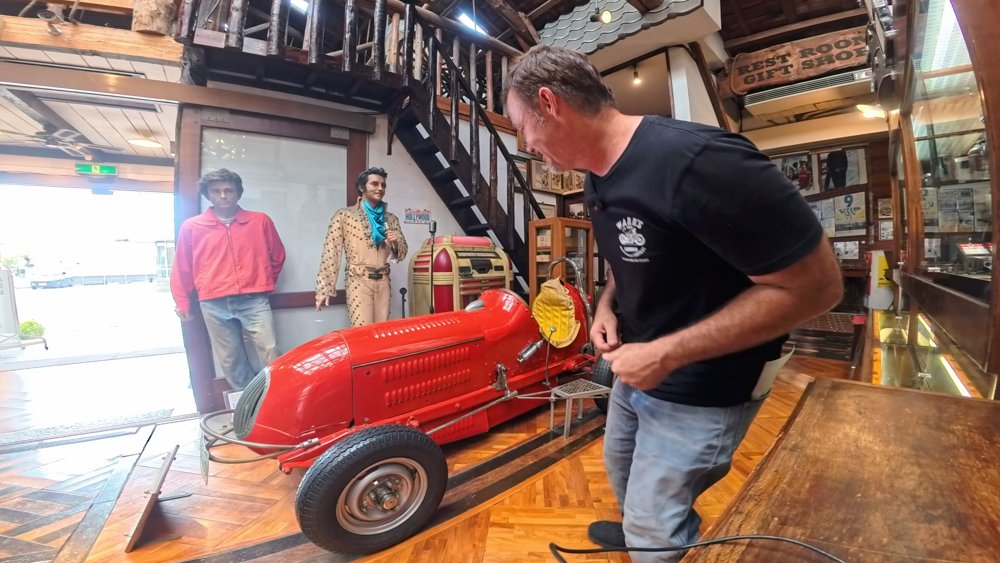
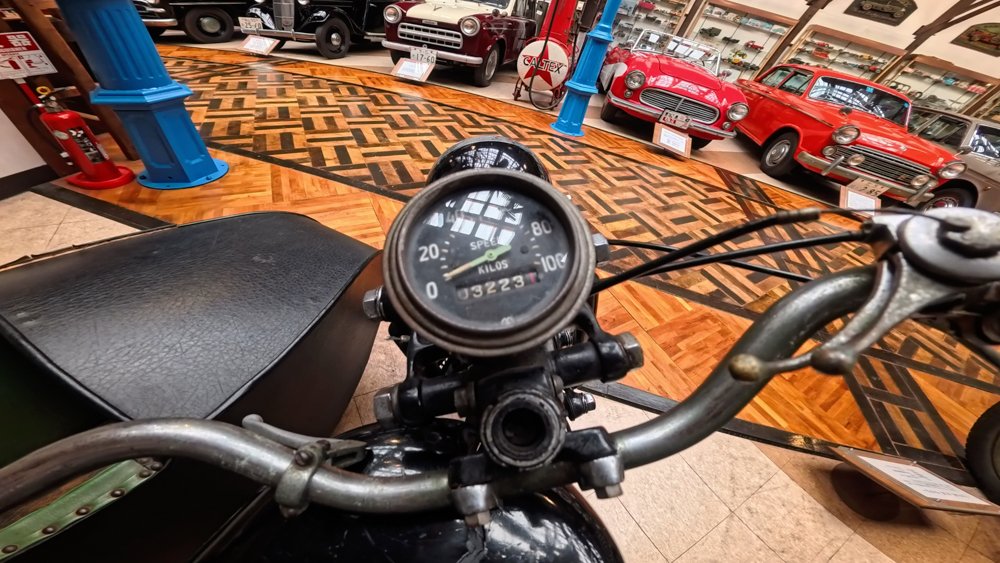
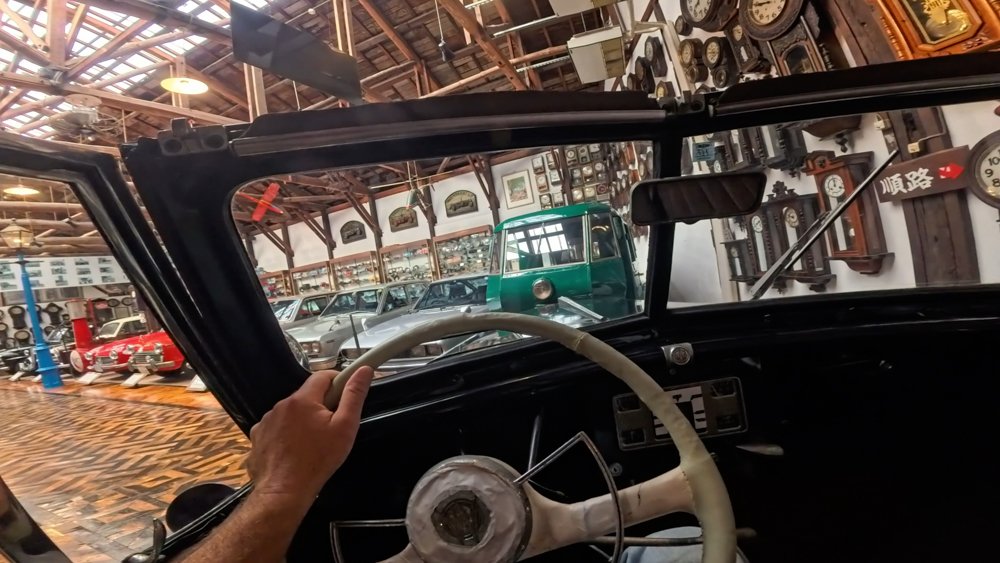
One of the highlights was a 1943 Crosley racing car that I was actually allowed to sit in. That alone felt unreal. Then there were vintage taxis, a Datsun Fairlady, a ’49 Jeepster, and all these machines I had spent years seeing in photos, old films, and TV shows — suddenly right there in front of me.
Not behind ropes.
Not locked away.
Right there.
To sit in them and feel the springs through the seat, to look down those long hoods and see the dash up close, it felt less like visiting a museum and more like stepping into history.
By the time I left, I was half convinced that might already be the highlight of the whole Hiroshima ride.
That’s how strong a start it was.
The Shimanami Kaido — Island Mode
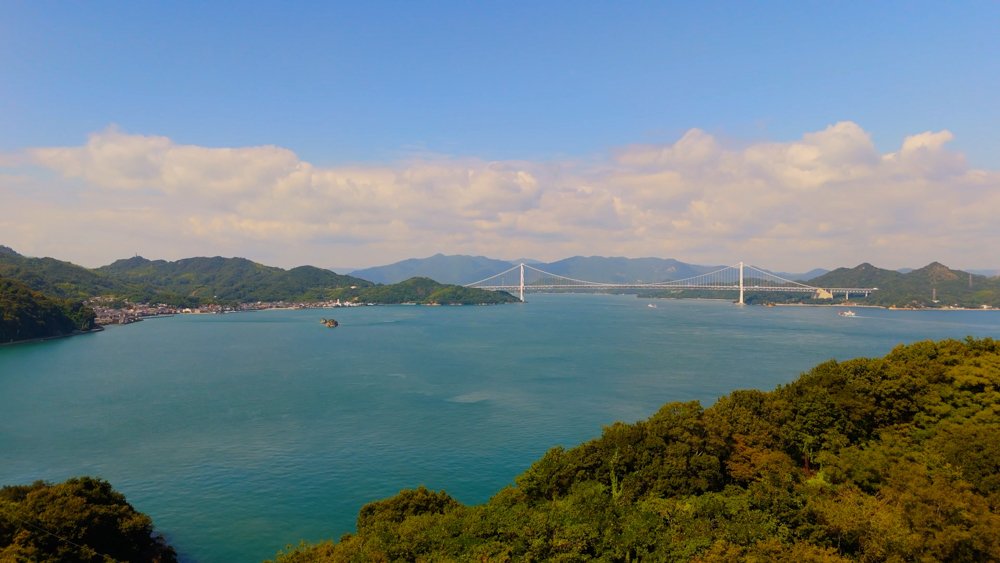
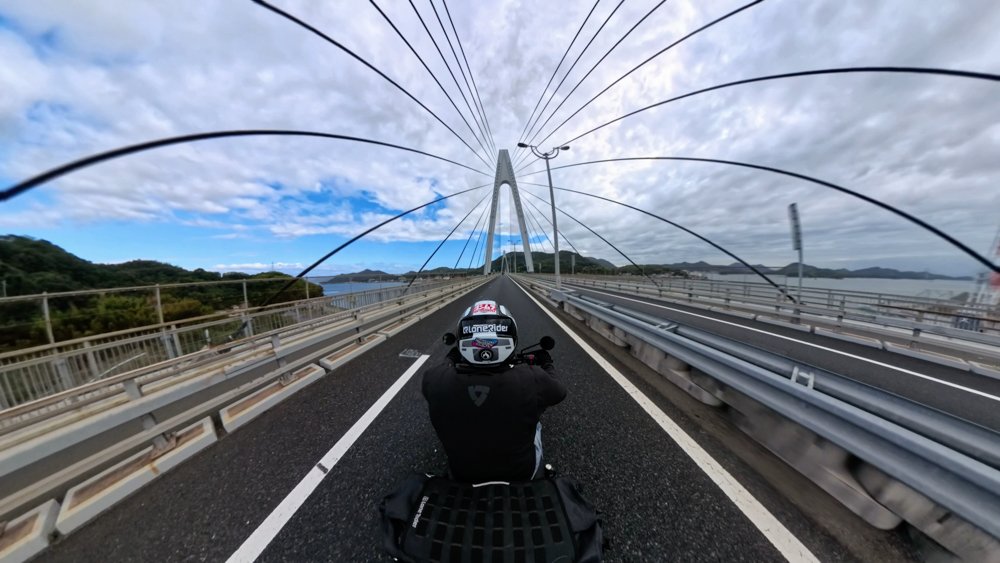
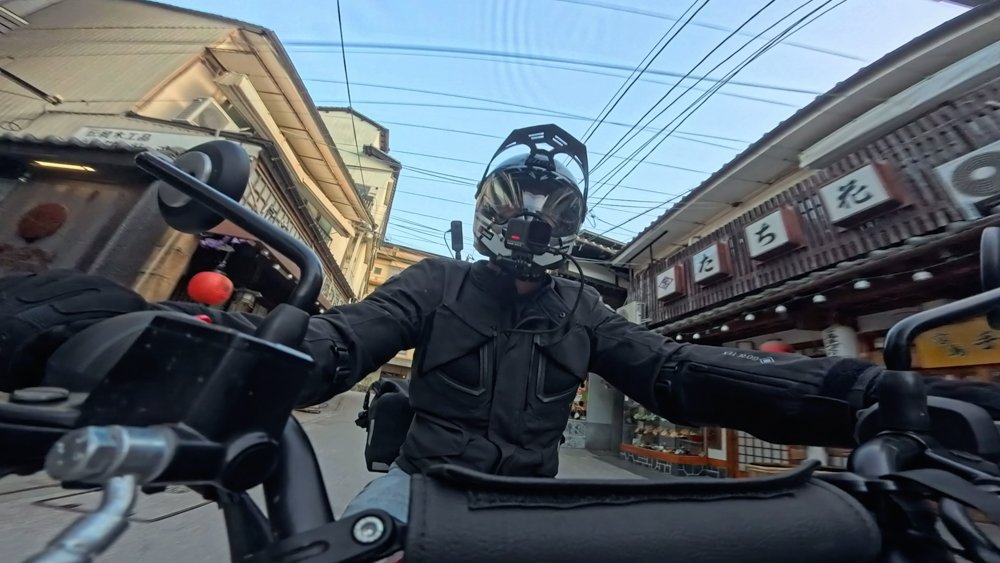
After a quick coffee stop, I headed down toward Onomichi and the Shimanami Kaido.
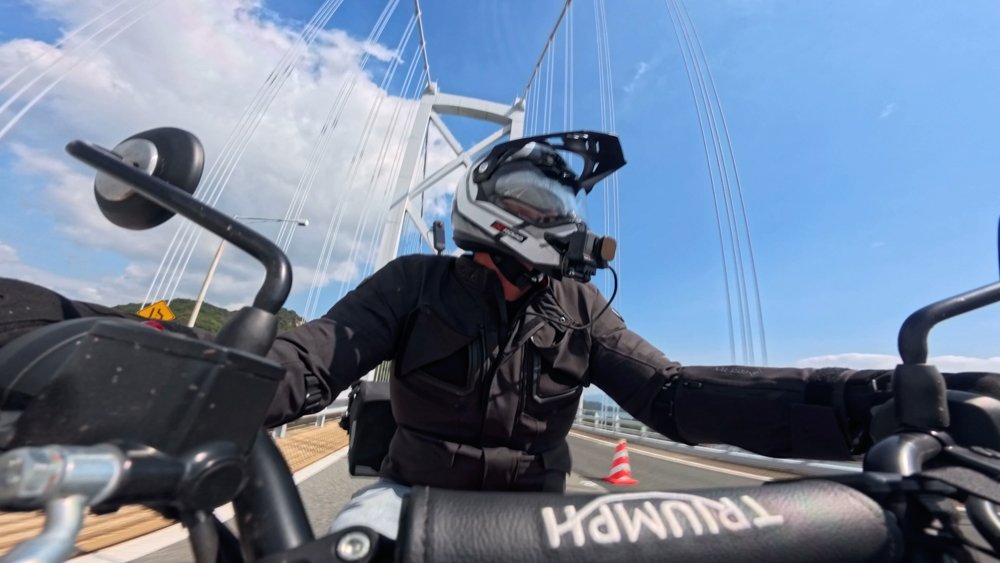
This is one of Japan’s most famous riding roads for good reason — a chain of bridges and islands stretching across the Seto Inland Sea, linking Honshu to Shikoku.
The moment I got onto it, the pace changed.
You don’t rush the Shimanami Kaido.
You just settle into island mode.
Blue water.
Bridge crossings.
Quiet roads.
That sense that there is always another good view just ahead.
It was the kind of riding that makes you stop checking the clock.
At one point I pulled over just to look back at the bridge I had crossed and take it in properly. Hiroshima was opening up in a way I hadn’t expected at all.
And then I decided to go looking for a temple.
Kousanji Temple — Beauty, Hell and Something Very Strange
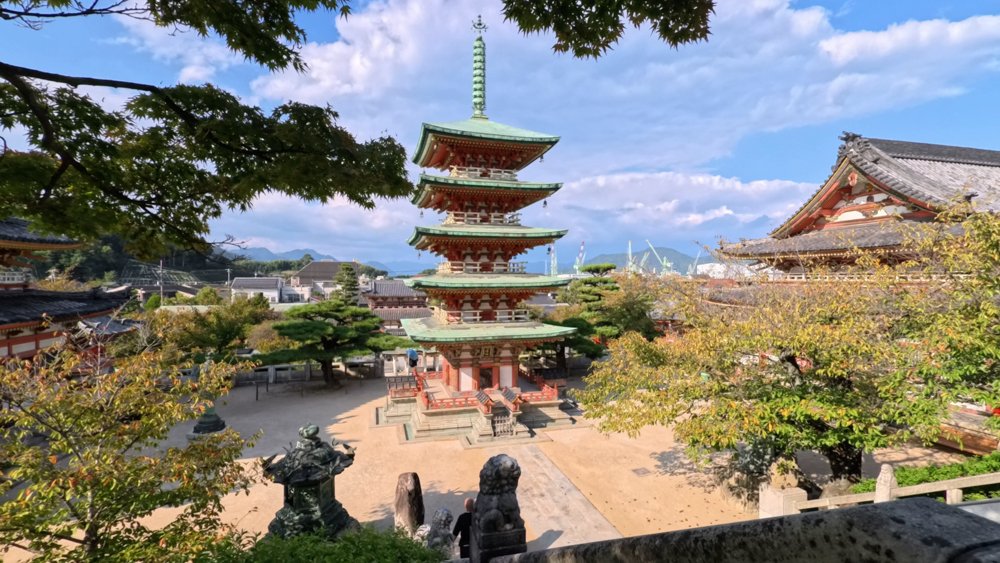
At first glance, Kousanji looked like a beautiful Buddhist temple.
Ornate. Peaceful. Familiar.
Then I noticed something off to the side.
And from there it got weird.
Very weird.
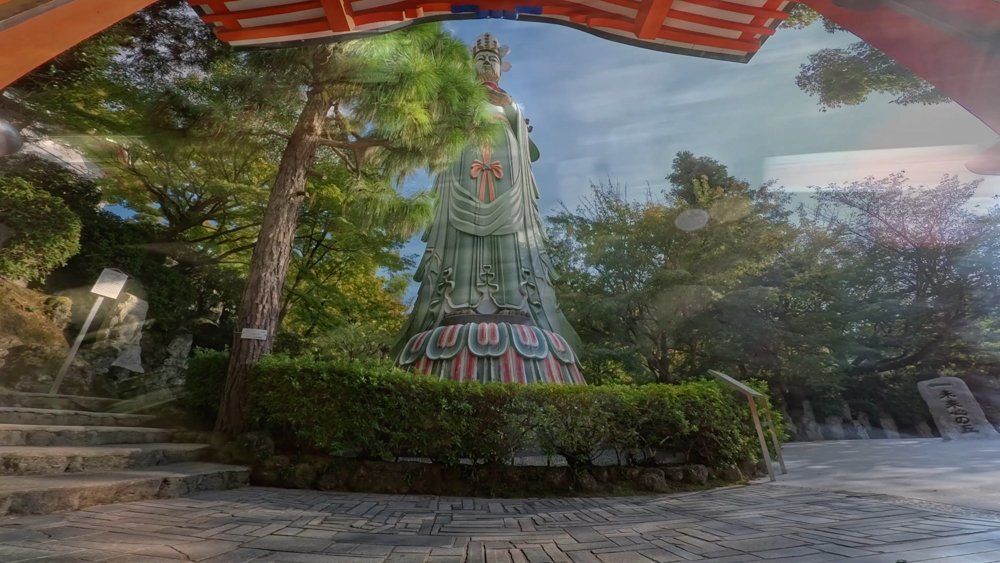
There were demons, tortured figures, bizarre cave-like spaces, strange statues, and a whole section that felt like some strange overlap between a temple, an art installation, and a fever dream.
At one point I genuinely felt like I had wandered onto the set of some surreal film.
It was fascinating.
Beautiful in parts, unsettling in others, and completely unlike what I had expected to find there.
By the time I came out the other side of it, I was half laughing, half confused, and entirely glad I had gone.
That was Hiroshima again — not what I expected, but very cool.
Sunset Beach and Camping in the Storm
After Kousanji, all I really wanted was camp.
A place to stop. A beer. A sunset. Some quiet.
I rode toward Sunset Beach with a storm building behind me, racing the weather just enough to make it interesting. By the time I got there, the sky was already changing fast.
Sunlight on one side.
Storm clouds on the other.
It was one of those strange, dramatic endings to a day that you don’t plan but always remember.
I set the tent up on a wooden deck to stay out of the soaking ground, cracked open a beer that wasn’t even cold, and let the storm do what it was going to do.
Day one in Hiroshima was in the bag.
And already it had given me far more than I thought it would.
Day 2 — Wind, Islands and an Unexpected Letdown
The second day started beautifully.
Clear morning light, island roads, bridges, and the sense that the ride was only getting better.
The Shimanami Kaido in the morning is something special. The islands feel almost quiet in a way that’s hard to describe, especially before the day fully wakes up.
My first planned stop was a sake brewery.
It looked promising on the map — historic buildings, an old-town feel, the kind of place where I imagined I might get to see a bit of the actual brewing process.
Instead, it turned out to be more of a storefront and a small photo display than anything immersive.
Not terrible.
Just disappointing.
But that’s part of travel too.
Sometimes you find something amazing.
Sometimes you find something that makes you wonder why you came.
And you keep riding anyway.
Kure and the Iron Whale
The next destination had been on my list for a long time.
The naval museum in Kure.
And when I arrived and saw the submarine sitting there in the open, it stopped me cold.
It was massive.
A full-sized submarine just sitting there like some impossible object that had washed ashore.
The best part was that you could actually go inside.
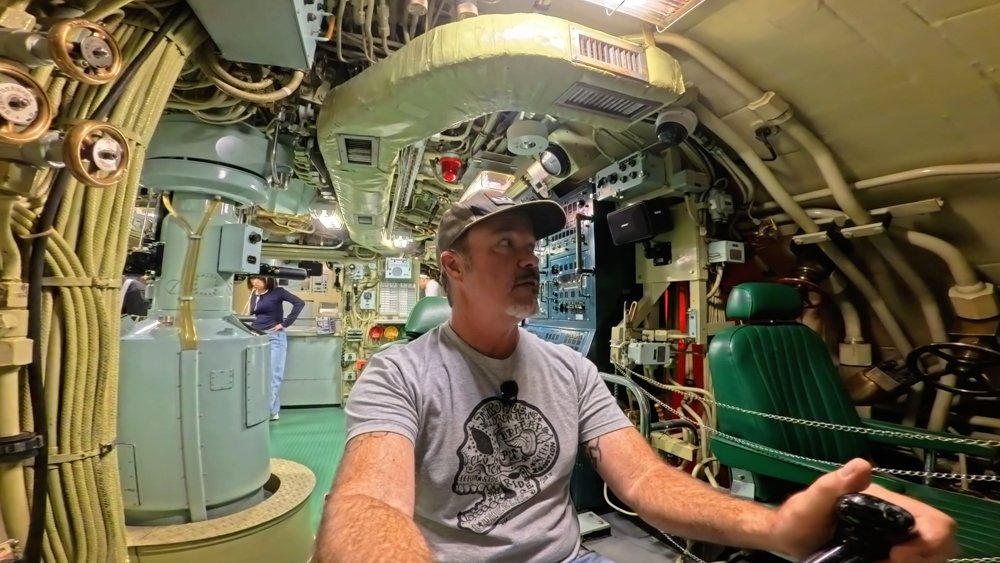
Walking through the submarine was one of the strangest and coolest museum experiences of the trip. Tight corridors, bunks stacked into impossible spaces, metal everywhere, little room to move, and the constant sense of how incredibly confined life must have been for the crew.
The captain’s room was tiny.
The crew quarters were tighter still.
The driver’s seat was surreal — all instruments and blind trust in the machinery around you.
It was one of those places that instantly makes you appreciate the physical reality of something you’ve only ever imagined from the outside.
Whatever disappointment the previous stop had left behind disappeared immediately.
The submarine was dope.
No other way to put it.
Hiroshima City — Food, Friends and the Weight of History
From Kure I rode into Hiroshima City.
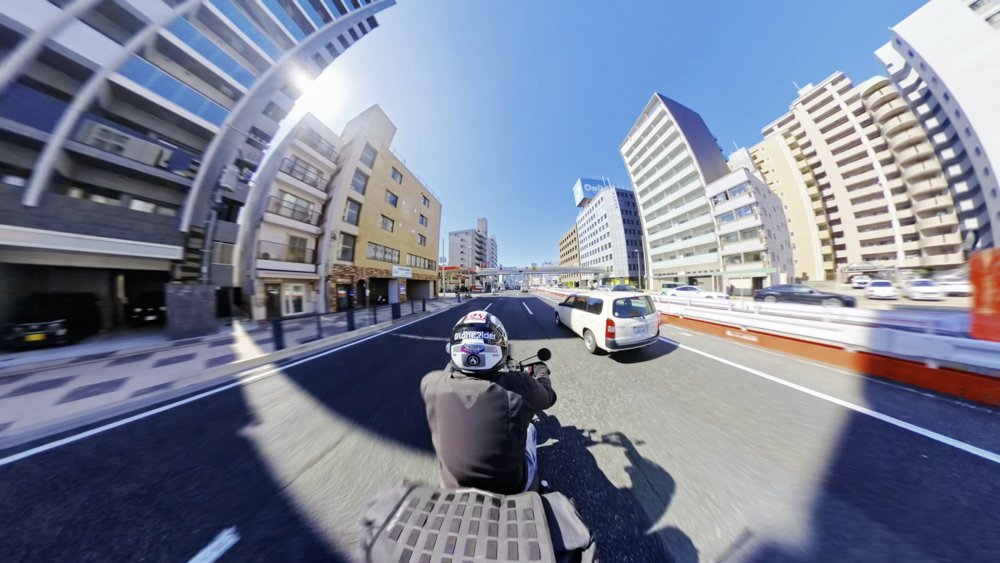
A friend had warned me about the driving in Hiroshima, and after nearly getting taken out a couple of times already, I’d say that warning was justified.
Still, once I arrived and checked in with the family-run hotel I always stay at when I’m in town, the mood shifted.
Good people have a way of doing that.
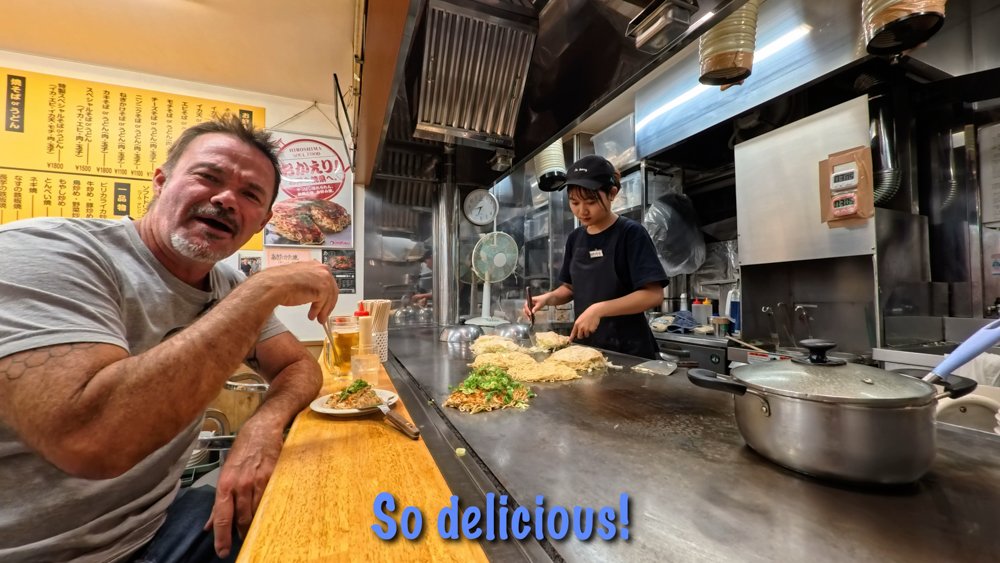
That night I went out for Hiroshima-style okonomiyaki at a place I’d been recommended, and it absolutely delivered.
A proper local meal.
Packed with flavor.
Exactly what I wanted at the end of a long day.
Hiroshima was starting to feel layered now.
Not just city traffic and major historical landmarks, but good roads, strange museums, and the kinds of local encounters that make a place settle into you properly.
Day 3 — The Peace Park
The third day began on foot.
That alone felt strange after so much riding.
I walked through the city toward the Atomic Bomb Dome and the Peace Memorial Park, and as always, the atmosphere there hit hard.
It is one thing to know the history.
It is another to stand in a place where that history happened.
The dome remains one of the most powerful visual reminders anywhere in Japan. And walking through the park, seeing the memorials, especially those dedicated to children caught up in the war effort, makes the scale of what happened feel immediate again.
It is emotionally draining.
And it should be.
Places like that are not meant to be comfortable.
They are meant to be remembered.
I have visited before, but it still gets me every time.
And maybe it should.
Because the point is not just to mourn what happened there. It’s to remember what happens when people convince themselves the answer is to go backward instead of forward.
By the time I left the park, I needed air, space, and a different kind of landscape.
So I decided to head for Miyajima.
Miyajima — The Island I Almost Skipped
I had always wanted to visit Miyajima.
I had also avoided it.
Too famous. Too touristic. Too many people.
Still, I figured this was the time.
At first, I thought maybe I’d even be able to camp there, which sounded incredible — an iconic island, deer wandering around, the floating torii gate nearby.
But a quick search revealed that the campsite had been closed permanently.
That was a blow.
Still, I went anyway.
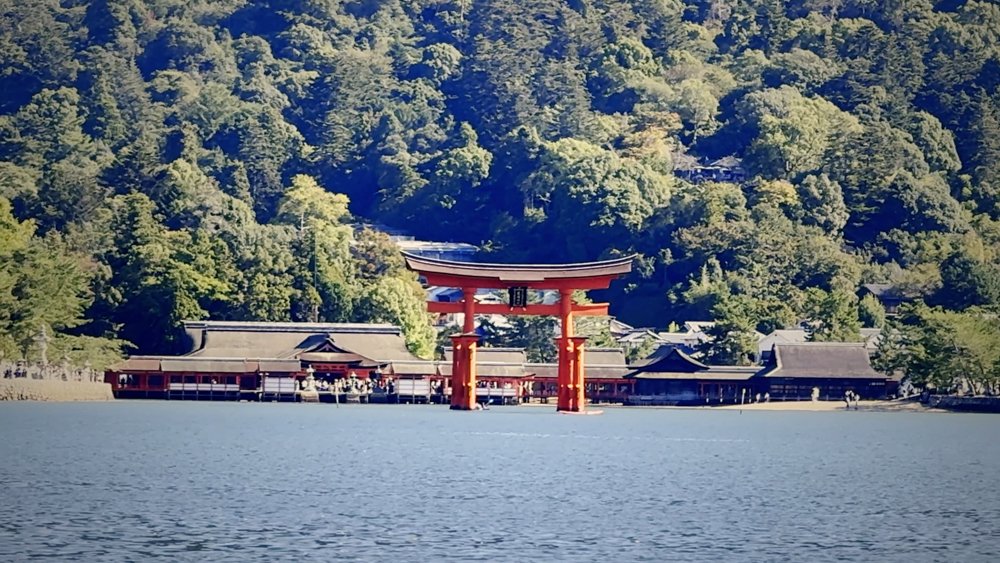
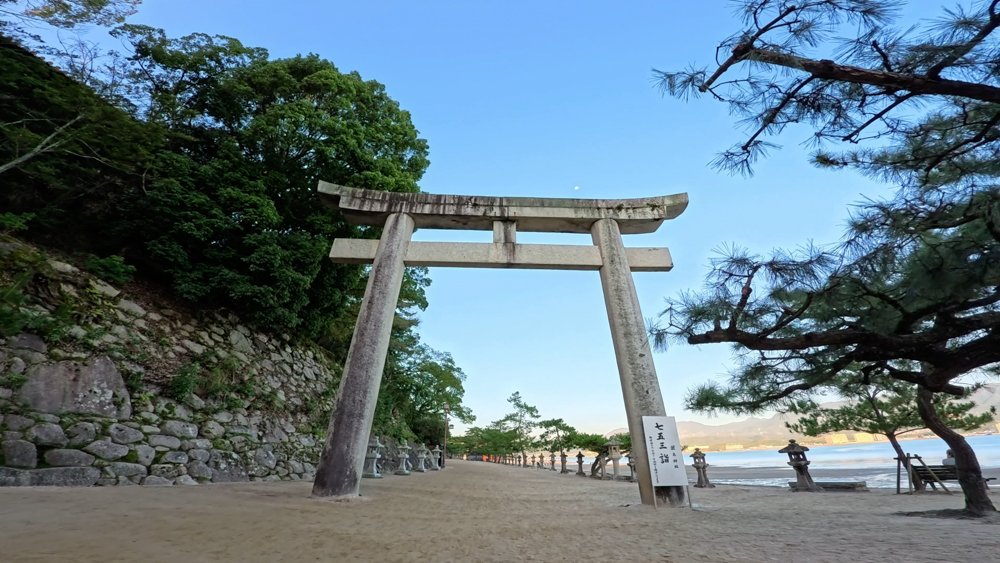
As the ferry approached the island and I saw the floating torii gate out in the water, it hit me that even if the place was crowded, it was still worth seeing.
And then I made a decision.
Forget the crowds.
Forget the main tourist push.
Just go find my own version of the island.
Deer, a Fox and an Unexpected Night
The main area of Miyajima was exactly as crowded as I feared.
So I rode away from it.
Almost immediately, the island became more interesting.
A better road.
Deer standing by the roadside.
Small beaches.
Quieter corners.
And then, somehow, I found a place to stay.
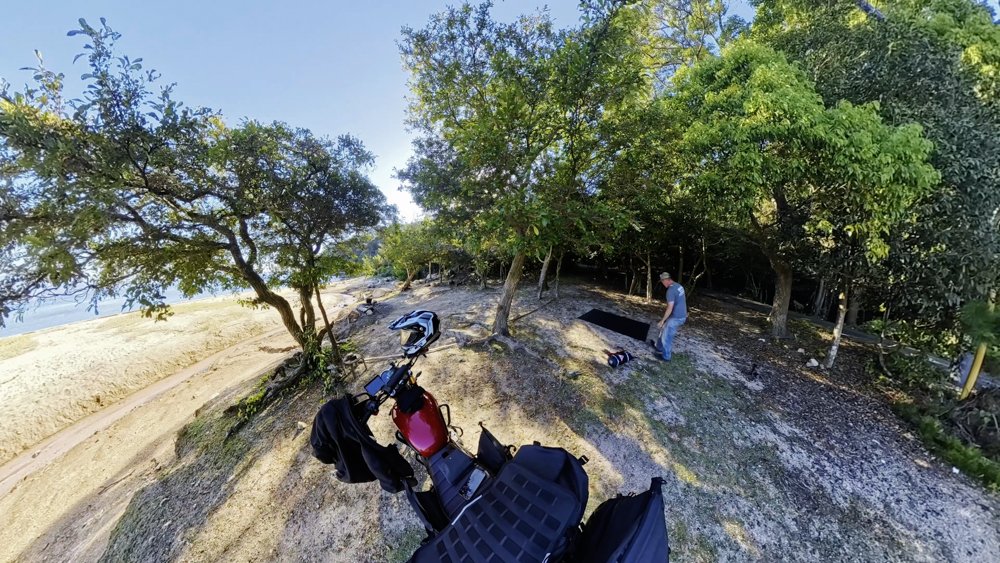
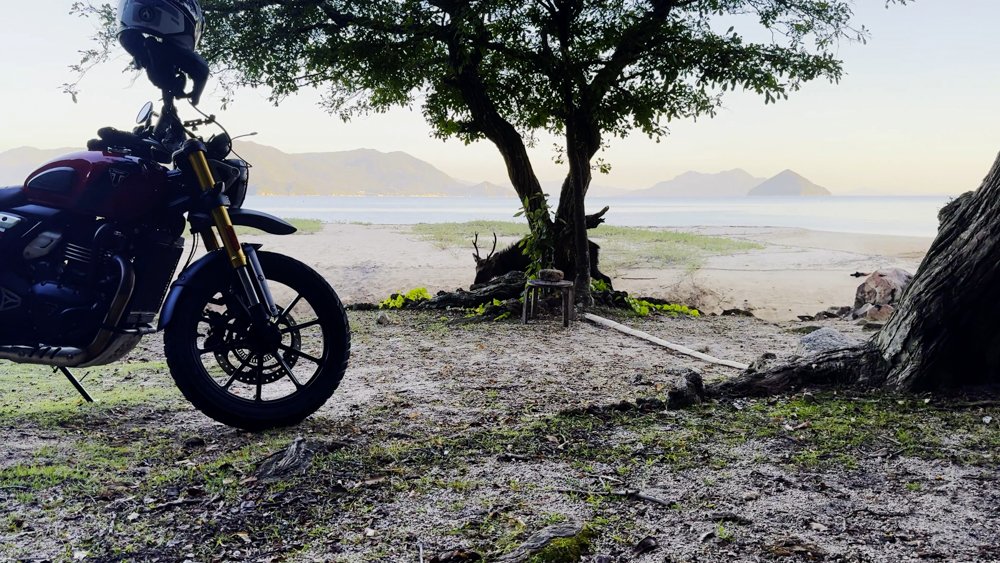
The bike beside the ocean.
Deer nearby.
And, unexpectedly, a fox crossing right in front of me.
I had never seen a fox in the wild before.
That alone would have made the night memorable.
Instead of forcing the famous version of Miyajima, I had found something quieter and more personal.
That felt right.
The Floating Gate in the Morning
The next morning I was up at 5:00 a.m.
The light was just coming across the bay, and for a moment it felt like I might get to experience Miyajima in peace.
Not quite.
It turns out there are some places in Japan you are simply never going to have entirely to yourself, no matter how early you wake up.
But even so, the island in the early morning was beautiful.
The floating gate.
The sea.
The mountain behind it.
That quiet softness before the day fully begins.
It was the right place to end the Hiroshima chapter.
The Other Side of Hiroshima
Before this ride, Hiroshima meant history to me.
The bomb.
The city.
The weight of that story.
And of course, that side of Hiroshima matters enormously.
But this prefecture turned out to be much bigger than that.
It gave me one of the best motorcycle roads in Japan.
It gave me islands, temples, storms, old cars, submarines, peace memorials, deer, foxes, and roads that kept surprising me.
It gave me a version of Hiroshima that most people never see.
And by the end of it, I found myself thinking something I hadn’t expected when I crossed into the prefecture:
Hiroshima might be one of the most misunderstood motorcycle prefectures in Japan.
Next stop: Yamaguchi Prefecture.