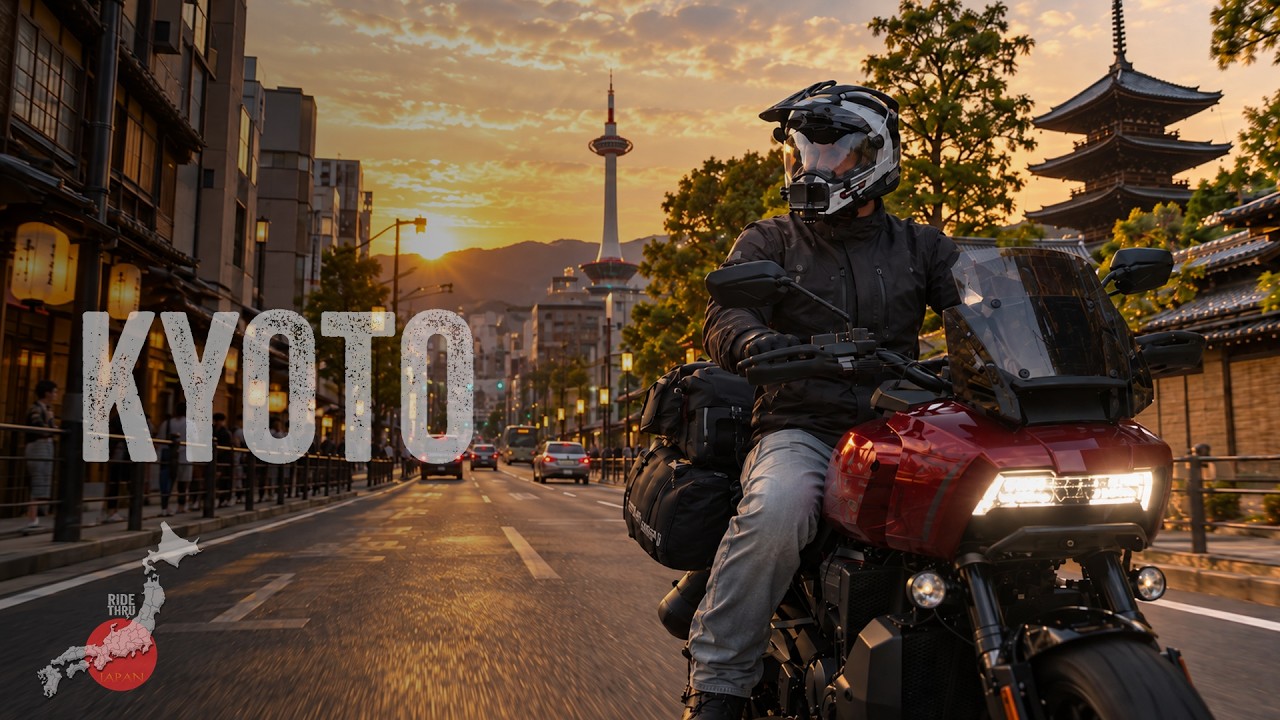
I first came to Kyoto twenty years ago.
Before Instagram. Before social media changed the way we discovered places. Before every famous street, temple, meal and viewpoint seemed to arrive on our phones before we ever got there ourselves.
I knew Kyoto.
Or at least I thought I did.
But riding back toward it as part of Project 47, I had some apprehension.
I had seen the videos. I had heard about the crowds. I had heard people say that Kyoto did not feel the way it once had.
There was only one way to find out.
I had to see it for myself.
What followed became less about whether Kyoto had changed and more about just how many different versions of Kyoto exist once you stop thinking of it as only a city.
This was three days by motorcycle through Kyoto Prefecture — from Uji and the streets of Gion to Kifune Shrine, a mountain road that became far more interesting than expected, Maizuru, and eventually the Sea of Japan coast at Amanohashidate.
Kyoto turned out to have a lot more faces than I remembered.
Day One — Riding From Nara Into Kyoto
The previous episode ended in a love hotel on the edge of Nara.
A very gold love hotel.
Possibly one of the most ridiculous hotel rooms I have ever stayed in.
By morning, I was pretty happy to put the jacket back on, pull on the helmet, start the Harley and get out of there.
The road north would take me into Kyoto.
I was not heading directly for the temples or the famous streets, though.
My first stop was Uji.
Starting Kyoto With Green Tea
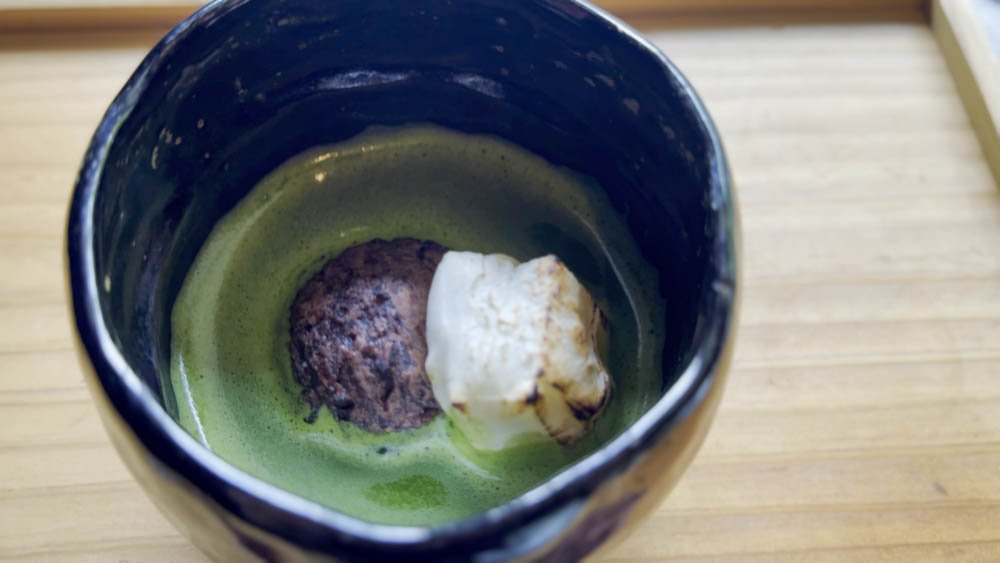
There are worse ways to arrive in Kyoto than sitting in a beautiful traditional tea house with green tea, azuki beans and mochi.
The bike had been carrying the evidence of several dirty days on the road, the weather was uncertain, and I had been moving constantly for weeks.
For a little while, none of that mattered.
I sat down, ate, drank, looked out at the garden and let the day slow down.
It was a simple stop.
But it immediately reminded me of something that would become increasingly important over the next few days.
Kyoto is not one experience.
And it certainly is not only the few square kilometres that most visitors come here to see.
Parking the Motorcycle and Taking the Train
Rain was forecast on and off.
Central Kyoto hotels were expensive, parking a fully loaded motorcycle was another problem, and after weeks of riding, giving both the bike and my body a break sounded pretty good.
So I found a cheaper hotel outside the centre near a railway line.
Park the bike.
Drop the gear.
Take the train.
Walk.
And if I found somewhere for a beer along the way, even better.
Traveling Japan by motorcycle gives you enormous freedom, but there are times when the bike becomes the least convenient way to explore somewhere.
Central Kyoto was one of those times.
So for the rest of the day, Project 47 continued on foot.
Walking Into Kyoto
Almost immediately, Kyoto started reminding me why I had always liked it.
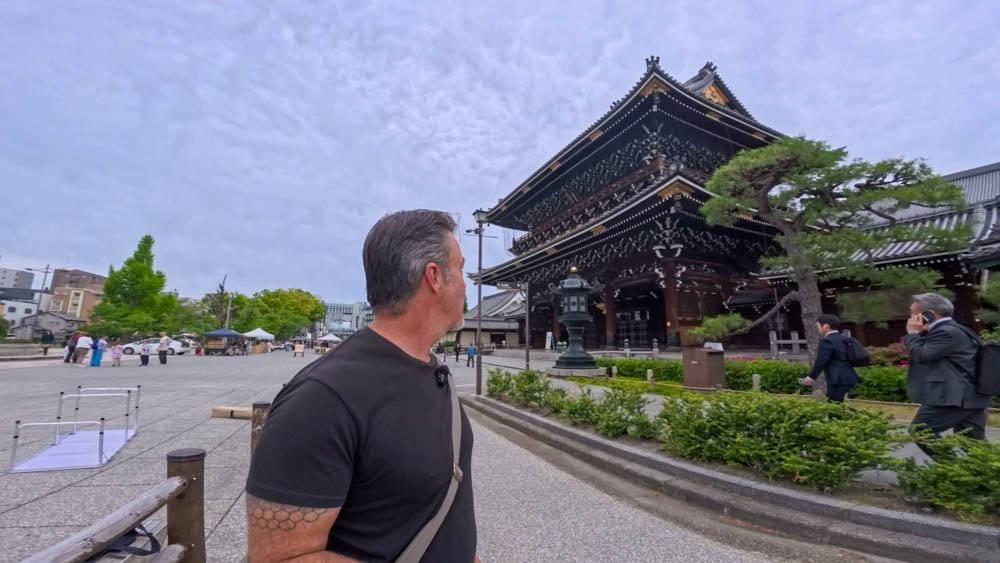
An old shrine beside the station.
Traditional buildings appearing between completely ordinary streets.
Small details that make you stop even when they were never part of the plan.
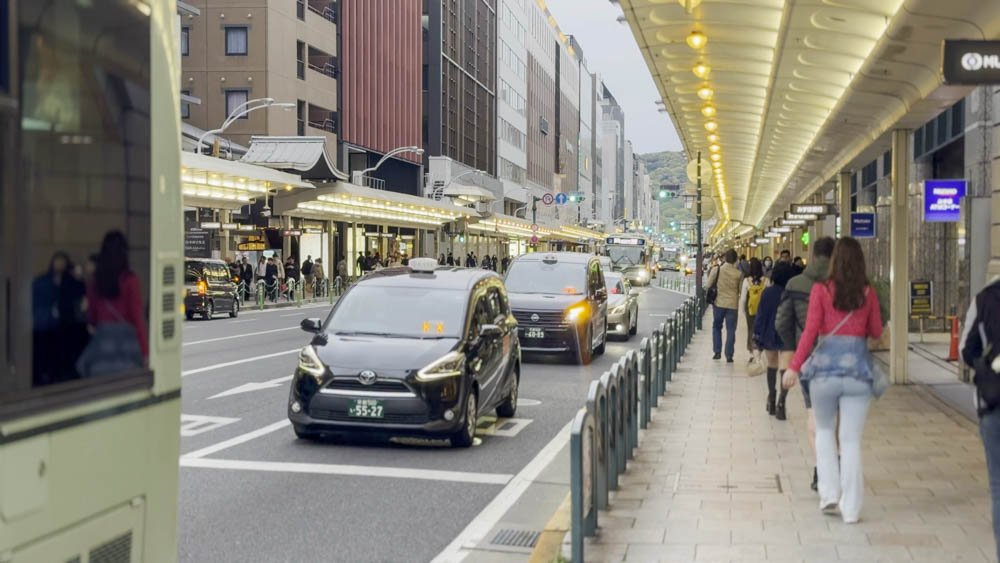
I walked.
Then walked some more.
If you visit Kyoto, be prepared for that.
Eventually I reached the main shopping area, which was far more polished and fashionable than anything I was interested in.
So I kept moving.
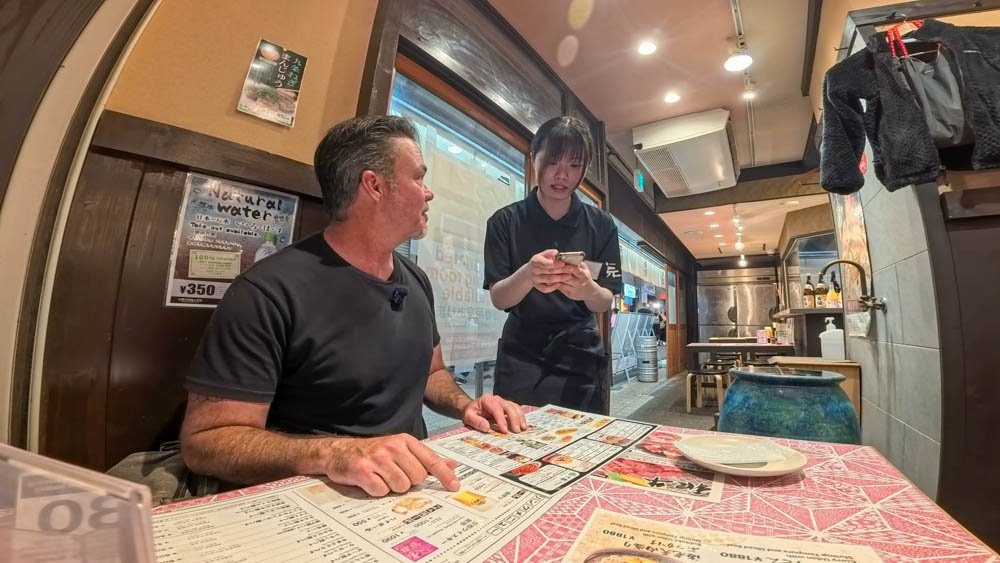
I was hungry.
That usually leads me somewhere better.
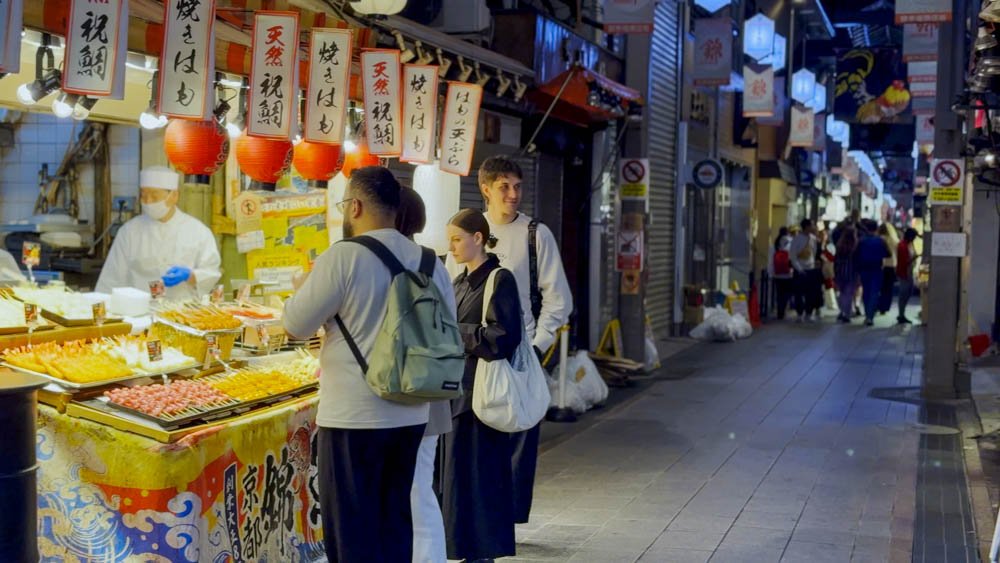
Nishiki Market
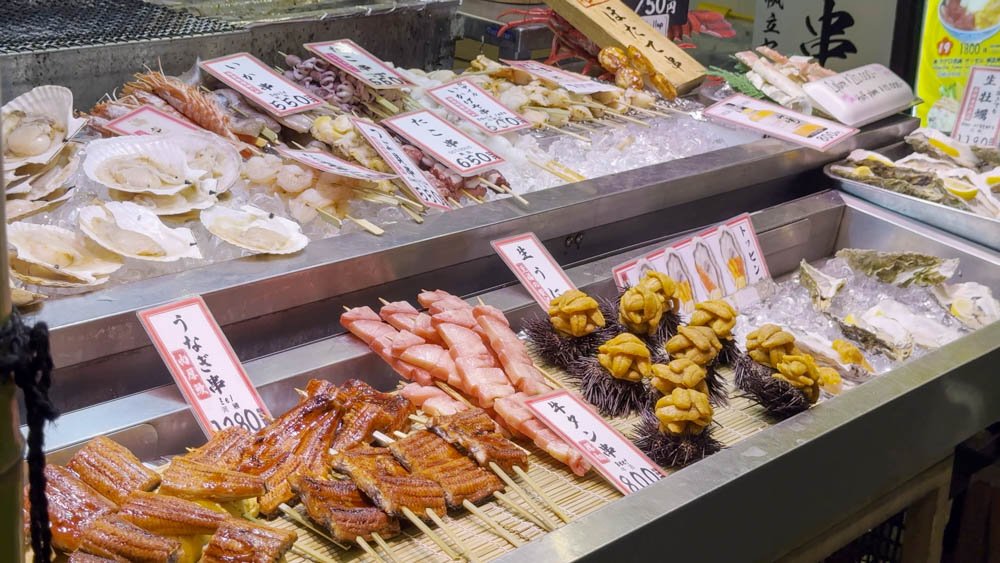
Nishiki Market felt good.
Busy, certainly.
But alive.
Food everywhere.
People talking.
Small shops packed into the narrow street.
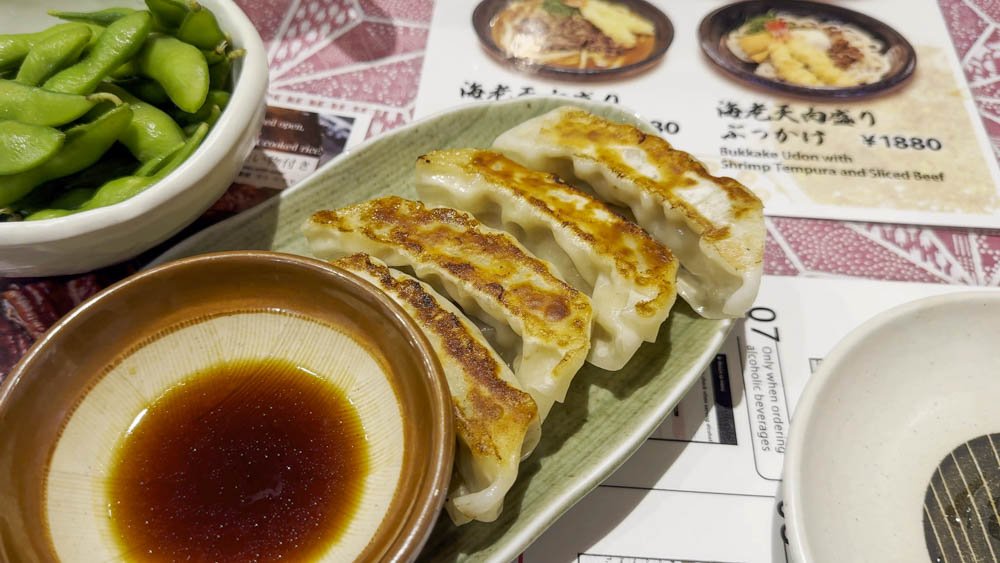
I stopped for a beer and some food, then continued walking because I was still hungry.
A few steps later I stopped again.
That became the rhythm of the afternoon.
Eat something.
Walk.
See something else.
Stop again.
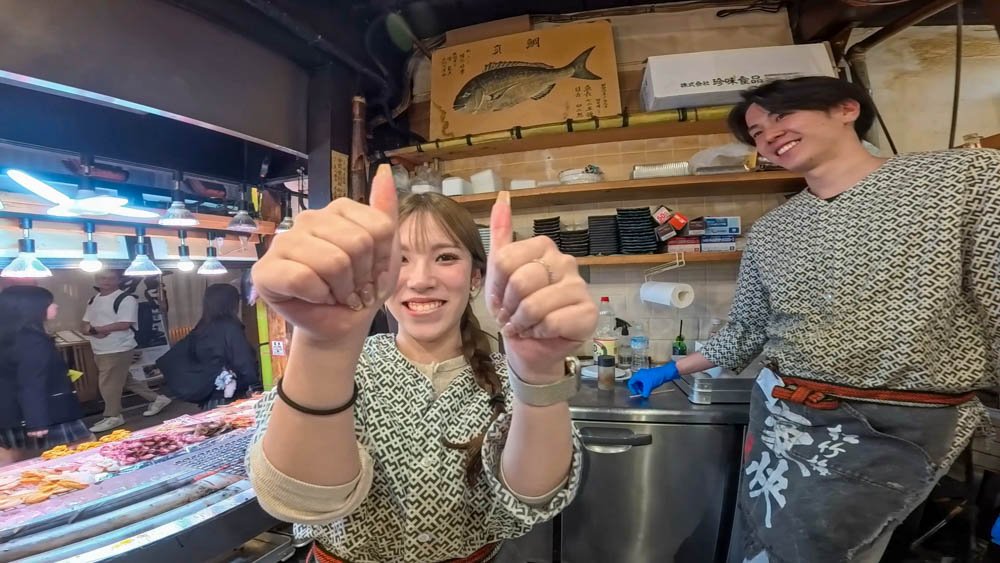
At one stall, a conversation with the young staff somehow turned into motorcycles and Honda.
It was one of those completely ordinary interactions that ends up staying with me longer than many of the places I deliberately travel to see.
They were funny.
Friendly.
Interested.
Just good people.
And so far, Kyoto felt every bit as good as I remembered.
Good food.
Good energy.
Great people.
The concerns I had carried with me into the city were starting to disappear.
Then I began walking toward Gion.
The Kyoto I Remembered
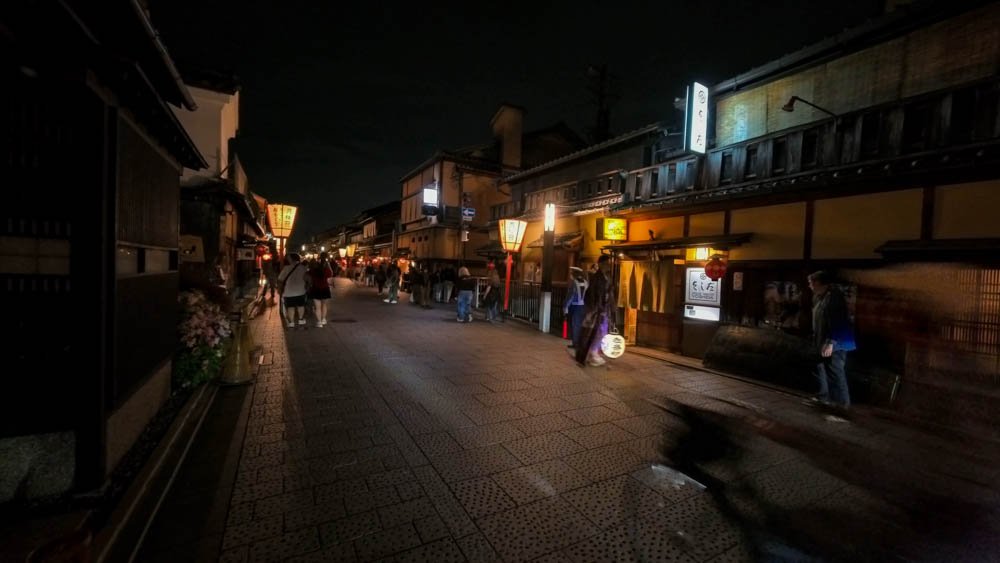
Gion was one of the parts of Kyoto that had remained particularly strong in my memory.
Twenty years ago, walking through those streets could feel like stepping through a crack in time.
Old buildings.
Narrow lanes.
Traditional restaurants.
And every now and then, a glimpse of a maiko or geiko moving through the streets.
It was never empty.
Kyoto has been one of Japan’s great destinations for a very long time.
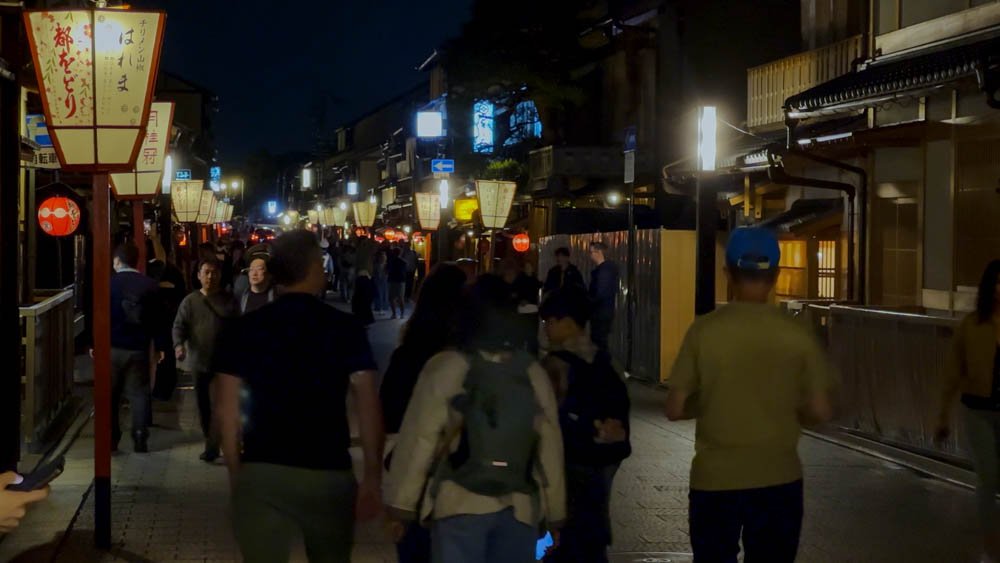
But as I walked toward Gion this time, I started noticing a change.
There were more visitors.
Then more.
At times I was hearing more English than Japanese.
The streets were still there.
The buildings were still beautiful.
But the feeling I remembered was becoming harder to find.
It was not anger.
I was a visitor too.
It was simply different.
After twenty years, perhaps it was unreasonable to expect otherwise.
I headed back to the hotel and called it a night.
The following morning, I would get back on the motorcycle and see what else Kyoto had to offer.
Day Two — Back on the Bike
The next morning began with one place I had somehow failed to visit during all my years in Japan.
Kinkaku-ji.
The Golden Pavilion.
It had been on my list since I first came to Japan, so this time I was finally going.
Even before I parked the motorcycle, the tour buses gave me some idea of what was waiting.
A lot of people had apparently had the same idea.
Kinkaku-ji
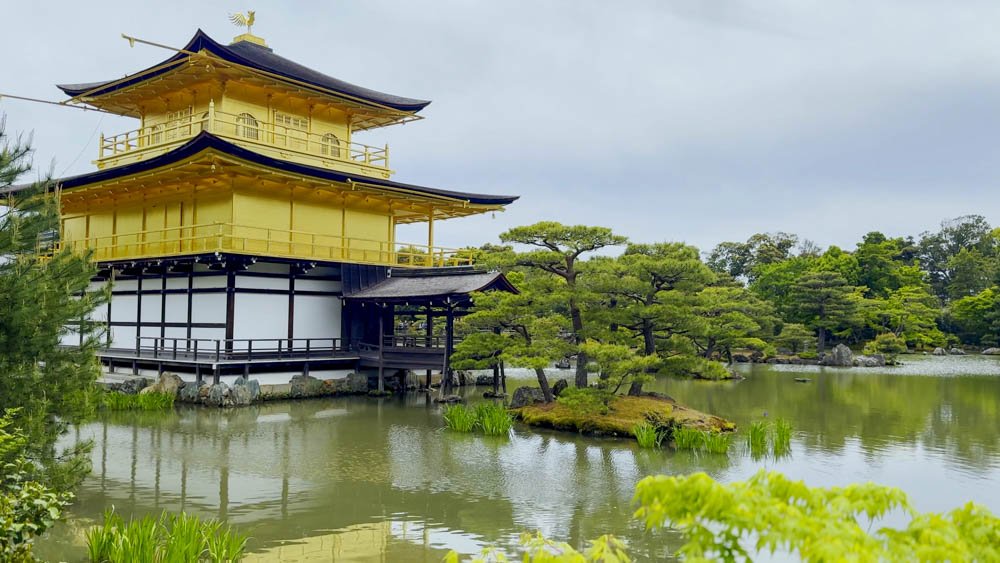
Kinkaku-ji is spectacular.
There really is no getting around that.
The gold pavilion sitting beside the pond is one of those rare places that actually looks like the photograph everyone has already seen.
Originally built in 1397 as a retirement villa for shogun Ashikaga Yoshimitsu, it later became a Zen temple. The pavilion standing there today was reconstructed in 1955 after the previous building was destroyed by fire.
And after all these years in Japan, I was glad I finally saw it.
But there were people everywhere.
Crowds moving along a controlled route.
Phones in the air.
Everyone trying to get essentially the same photograph.
Standing there among all those people, I realised I had had enough of the crowds.
And that changed the day.
Kyoto Prefecture is a lot bigger than the handful of places everybody comes here to see.
So I got back on the bike and headed north.
Into the mountains.
Twenty Minutes Can Change Everything
It did not take long.
Traffic faded away.
Buildings became less frequent.
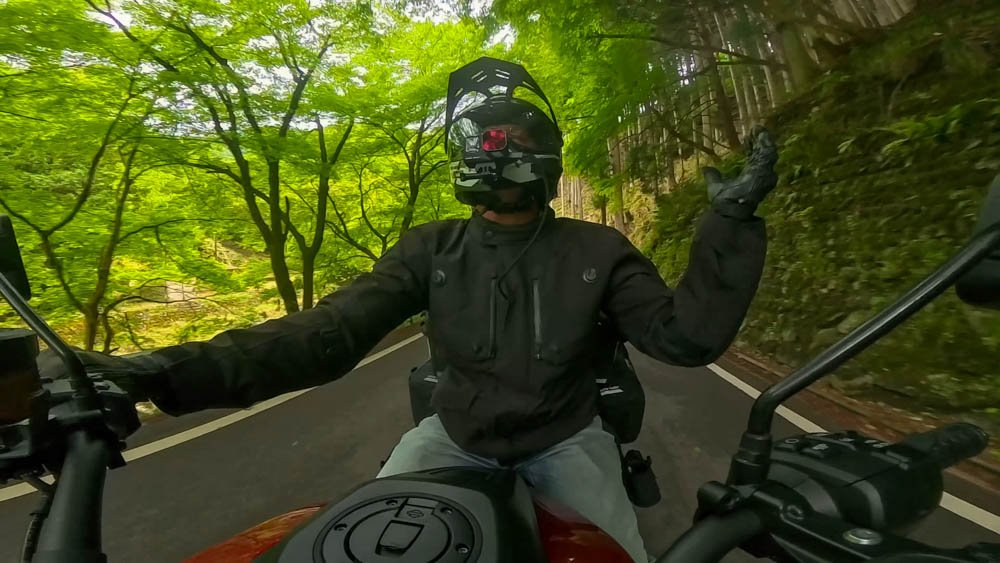
The road began climbing through trees.
Water appeared beside me.
Then waterfalls.
Green everywhere.
The temperature dropped.
And suddenly Kyoto felt completely different.
Not hours away.
Not in another prefecture.
Just outside the part of Kyoto most people concentrate on.
The road eventually brought me to Kifune.
And almost immediately, I knew I had made the right decision.
Kifune Shrine
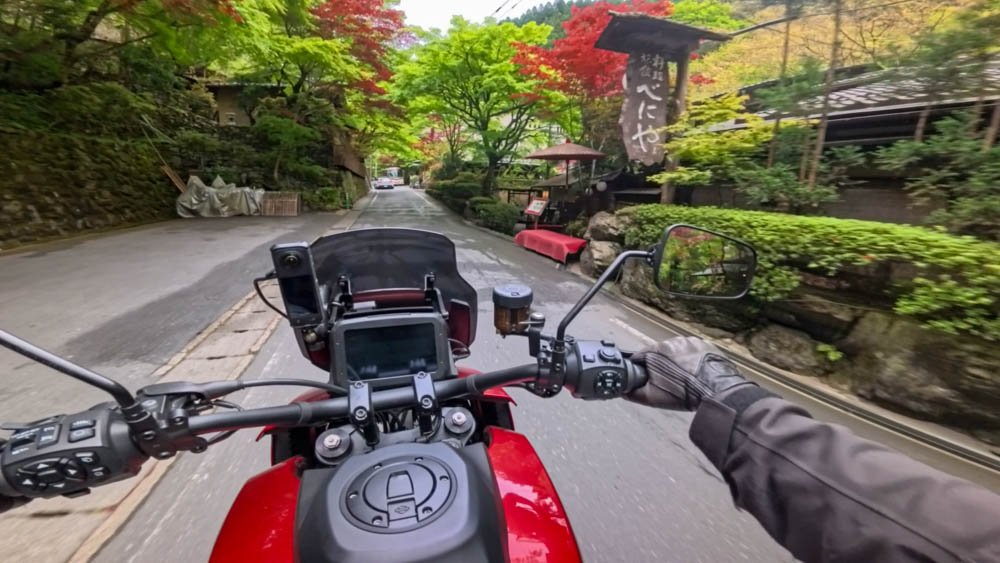
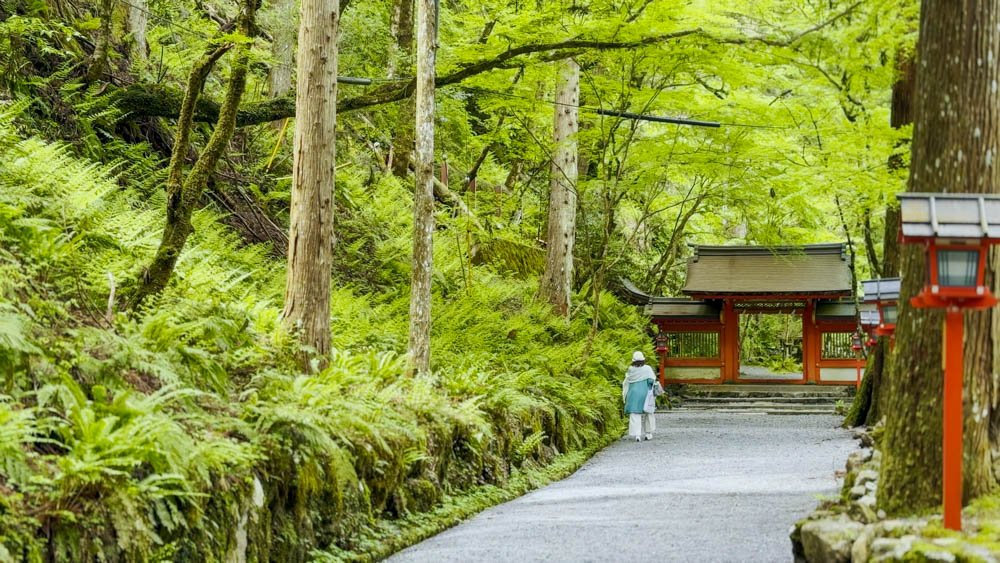
Kifune was beautiful.
Not beautiful in the monumental way Kinkaku-ji is beautiful.
It was quieter than that.
Trees.
Water.
Moss.
Red lanterns appearing between the green.
The river constantly moving through the valley beside the road.
Kifune has been considered sacred for well over a thousand years. The shrine is dedicated to Takaokami-no-Kami, a deity associated with water, and even the Imperial Court once came here to pray for rain — or for the rain to stop.
Walking beside the river and through the forest toward the shrine, that relationship with water made complete sense.
The whole place seemed built around it.
And after the intensity of central Kyoto, the contrast was enormous.
I was only a short ride from one of the most heavily visited cities in Japan.
Yet here I could hear the river.
Walk beneath the trees.
Stop.
Look around.
Breathe.
This was Kyoto too.
The Road North
Leaving Kifune, I looked at the road ahead and thought it looked incredibly beautiful.
Then I hoped it was actually passable.
That turned out to be a reasonable concern.
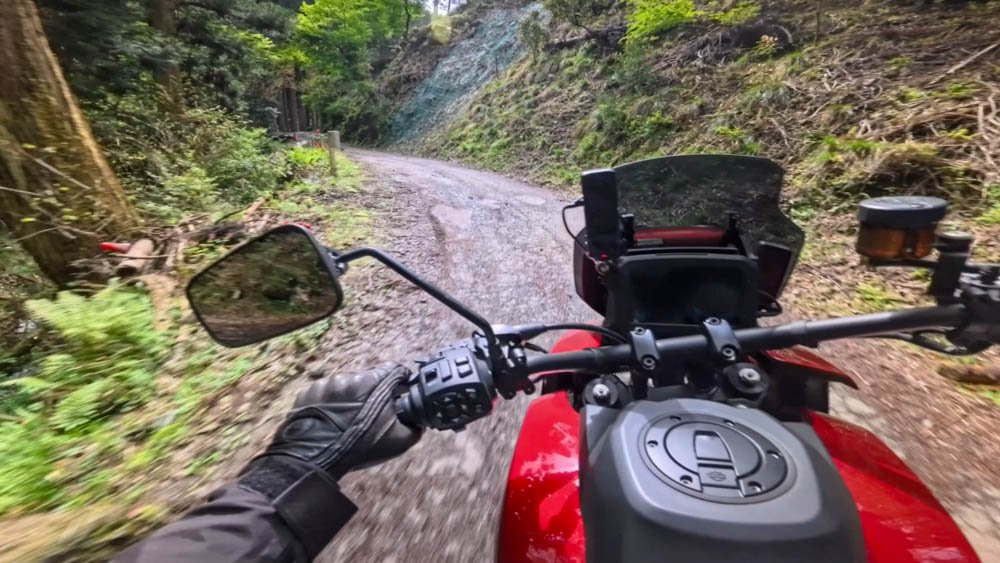
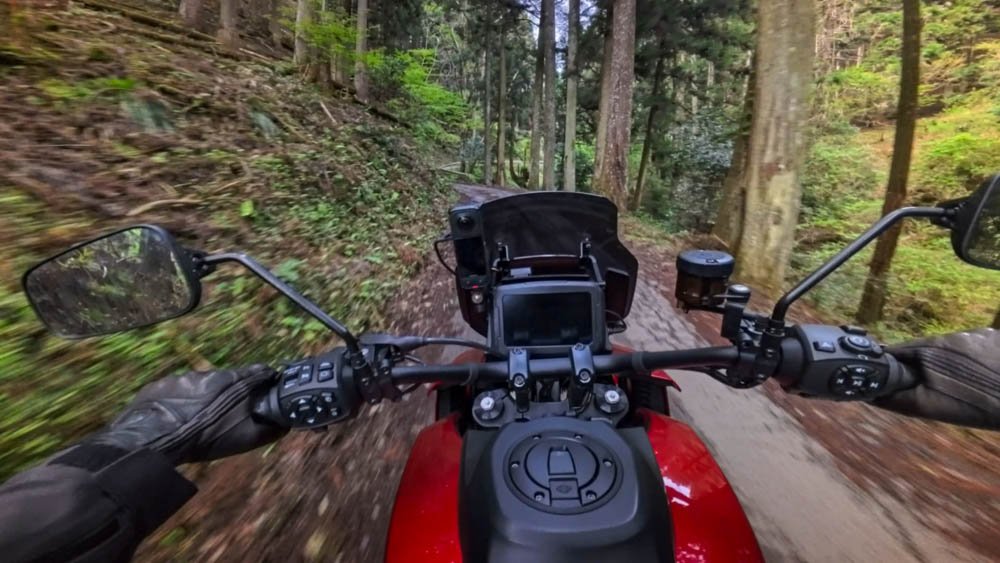
The road narrowed.
Rocks started appearing across the surface.
Phone reception disappeared.
There were warnings for falling rocks.
Then came gravel.
Mud.
Potholes.
Very tight switchbacks.
And a Harley-Davidson Pan America ST running on road-oriented tyres.
Perfect.
This was exactly the kind of completely unnecessary road decision I seem particularly good at making.
One of Those Roads
The further I went, the more technical it became.
Some sections were slick.
Others were covered with debris.
A few switchbacks were so tight I almost had to turn the motorcycle around itself to get through them.
I was completely focused.
And that is one of the reasons I love riding roads like this.
There is no space left in your head for anything else.
You are thinking about grip.
Line.
Surface.
Where the front wheel is going.
What might be around the next blind corner.
Where the road disappears.
Everything else shuts off.
Then you finally come out the other side and realise how calm you feel.
Completely focused while you are doing it.
Completely refreshed afterwards.
That little mountain road became one of my favourite rides in Kyoto.
You think of Kyoto and this is probably not what comes to mind.
But maybe it should.
The Other Side of Kyoto
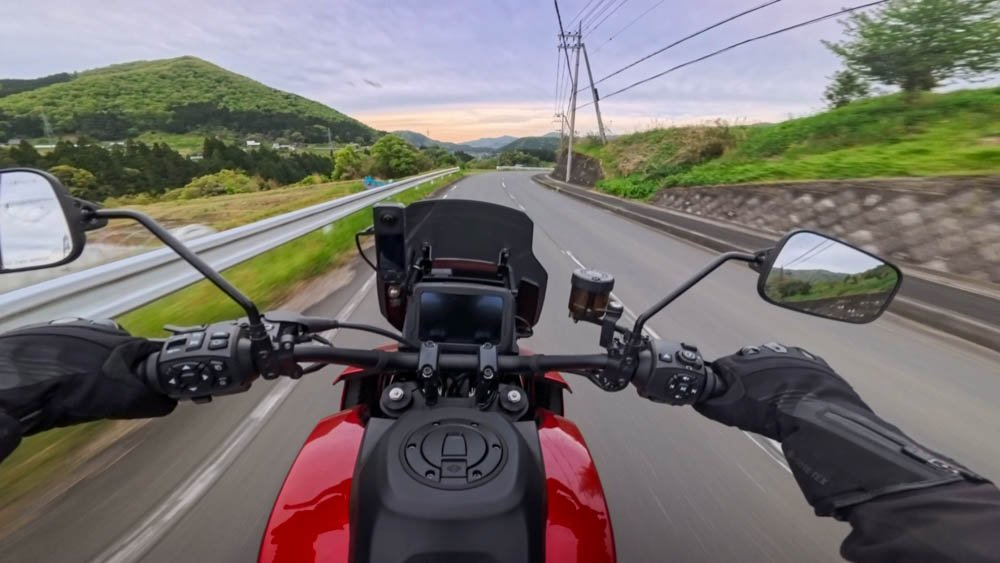
Eventually the road opened again.
Small mountain communities appeared.
Traditional houses sat beneath steep roofs built for the conditions up here.
The mountains began giving way to wider roads.
Even the sun appeared for a while.
This was what I had wanted from the day.
Not because the famous places were somehow wrong.
But because this was another side of Kyoto entirely.
One I had barely thought about before riding through it.
My plan was to continue north until I reached the Sea of Japan.
Distance-wise it was not enormous.
Time-wise, after the mountain crossing, there was still plenty of riding ahead.
And it was getting cold.
Coffee, Food and Cold Air
The temperature had dropped to around 15 degrees.
The wind was cutting through me.
I needed another layer.
More importantly, I needed food and coffee.
Then I spotted a Daily Yamazaki.
Saved.
A scrambled egg sandwich, something sweet and a coffee were not exactly culinary Kyoto.
They were exactly what I needed.
I found a tiny table, sat down for a while, ate, warmed up and prepared to keep riding north.
These stops rarely make travel brochures.
On a long motorcycle journey, they can be some of the most important stops of the day.
Changing the Plan in Maizuru
By the time I came down from the mountains, the temperature had dropped further and a strong north wind was blowing in from the coast.
I had been thinking about camping.
That suddenly sounded considerably less attractive.
There is a point where adventure stops being adventure and just becomes voluntarily making yourself miserable.
I had nothing to prove.
So I changed the plan.
I found a hotel in Maizuru, parked the motorcycle and went for a walk.
Frankie and the Blues Bar
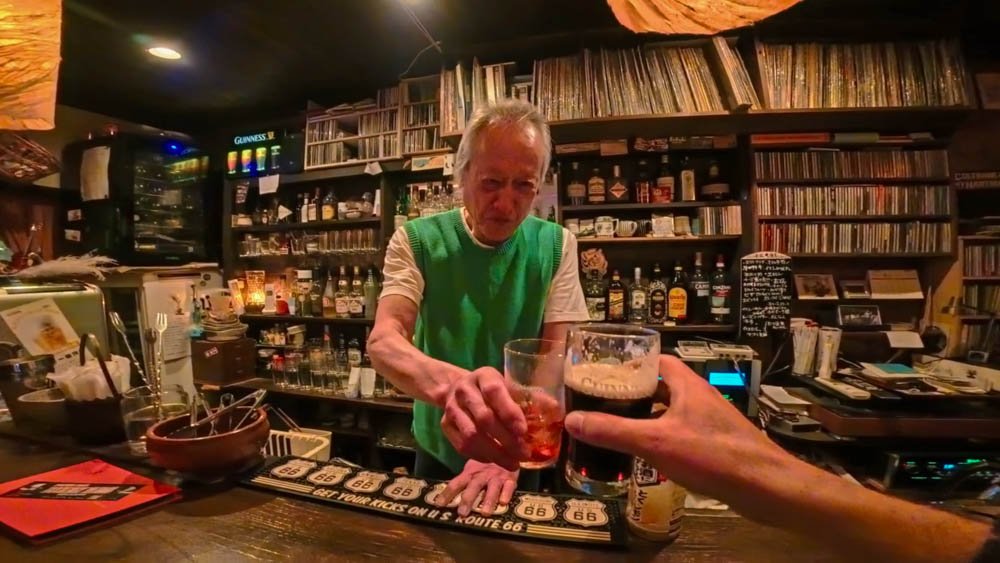
Somewhere along that walk, I found a little local blues bar.
I went inside.
The owner told me to call him Frankie.
We talked about music.
We talked about whatever else came up.
And I just sat there for a while.
There was no dramatic story.
No major destination.
No revelation.
Just a small bar in Maizuru, some music and a conversation with somebody I would never have met if I had stuck rigidly to the plan.
Not quite the night I had expected.
But a pretty good way to finish the day.
Day Three — Coastal Kyoto
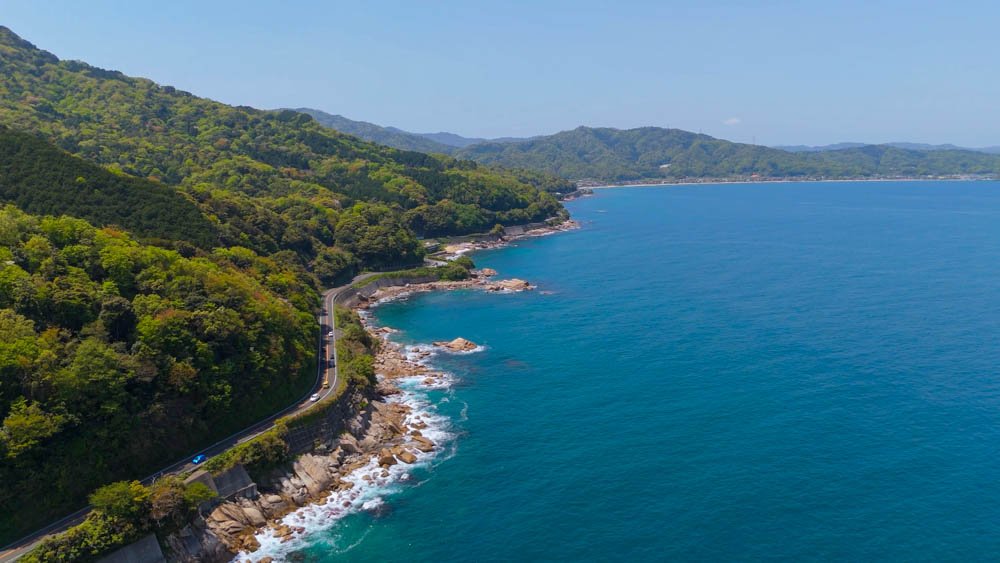
The next morning, I continued along Kyoto’s northern coast.
And again, the prefecture changed.
Mountains met the sea.
Small fishing towns sat beside the water.
The roads followed the coastline.
This was coastal Kyoto.
Rugged.
Open.
Beautiful.
A long way from the image most people probably have when they hear the word Kyoto.
Amanohashidate
The road eventually brought me to Amanohashidate.
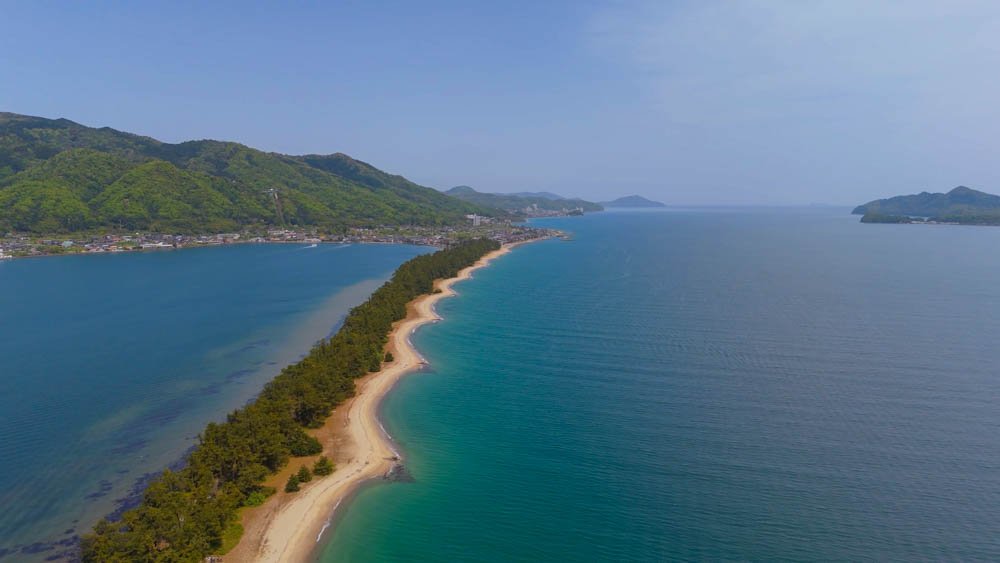
A narrow strip of pine-covered land stretching across Miyazu Bay.
From ground level, you see pieces of it.
From the air, it makes sense.
I sent up the drone.
The coastline opened beneath it.
The bay.
The mountains.
The towns.
And that thin line of land cutting through the water.
Absolutely breathtaking.
It was the perfect final reminder of what these few days had become.
Kyoto had not been one thing.
It had been many.
Kyoto Has So Many Faces
You could spend a long time exploring Kyoto Prefecture.
The city alone could take days.
Then there is Uji.
Kifune.
The mountains.
Tiny roads disappearing through the forest.
Maizuru.
The Sea of Japan coast.
Amanohashidate.
And all the places between them that I rode past because Project 47 still had a long way to go.
That is one of the strange things about this journey.
Every prefecture gives me reasons to stay.
But staying is not the journey.
Eventually I have to start the motorcycle again.
I still had a long way to go in my ride across all 47 prefectures of Japan.
So I pointed the bike toward the next one.
Shiga.
Watch the Full Kyoto Motorcycle Journey
Kyoto Has More Than One Face is part of Project 47, my solo motorcycle journey through all 47 prefectures of Japan.
This chapter follows three days riding through Kyoto Prefecture — from Uji and central Kyoto to Kinkaku-ji, Kifune Shrine, mountain roads, Maizuru and the Sea of Japan coast at Amanohashidate.
This is not a Kyoto travel guide.
It is the next part of the journey.
About Project 47
Project 47 is a solo motorcycle travel documentary across Japan.
The goal is simple: ride through all 47 prefectures, not as a checklist, but as one continuous journey through the roads, landscapes, people, cities, mountains, coastlines and unexpected moments that appear along the way.
Each prefecture is one chapter.
Together, they make the journey.
One rider. One motorcycle. Forty-seven prefectures.
This is Japan by motorcycle.
Continue the Ride
Project 47 Episodes
Follow the complete solo motorcycle journey across Japan.
Days Like This — Nara
The previous chapter of Project 47, ending on the road toward Kyoto.
Solo Motorcycle Travel in Japan
The reality of riding alone through Japan for months at a time.
Episode Details
Series: Project 47
Episode: Kyoto
Journey: Nara → Kyoto → Shiga
Motorcycle: Harley-Davidson Pan America ST
Locations: Uji, Kyoto City, Nishiki Market, Gion, Kinkaku-ji, Kifune Shrine, Maizuru, Amanohashidate
Format: Solo motorcycle travel documentary