
This is the Triumph Scrambler 400 X.
But is it really a scrambler?
That question matters because Triumph could easily have called this motorcycle the 400 X and allowed it to exist as an affordable, upright road bike with a little extra suspension travel.
But it did not.
Triumph added the word Scrambler, and that name carries expectations. It suggests dirt tracks, stripped-back motorcycles, high exhausts, rebellion and the freedom to keep riding when the road stops being a road.
I did not borrow the Scrambler 400 X for an afternoon press launch. I owned it, modified it, dropped it, rode it through the mountains and used it for part of my solo journey through all 47 prefectures of Japan.
This review is based on what the bike is actually like to live with—not what it looks like parked outside a café.
Triumph Scrambler 400 X: The Quick Verdict
The Triumph Scrambler 400 X is a road-focused motorcycle with genuine light off-road capability.
It is not an enduro bike. It is not designed for motocross, jumps or aggressively attacking technical trails. Triumph itself describes the bike as suitable for road riding and “light off-road use,” including unpaved, dirt and gravel roads.
What it does offer is:
- An engaging 398cc single-cylinder engine.
- A natural and commanding riding position.
- Excellent low-speed balance.
- Enough suspension travel for damaged roads and moderate trails.
- A useful Off-Road mode.
- Manageable weight.
- Good real-world fuel economy.
- Far more character than most motorcycles in its price category.
Its greatest strength is not outright performance. It is that the bike makes ordinary roads entertaining and gives you enough confidence to explore the questionable road disappearing into the mountains.
That is where the Scrambler 400 X makes sense.
Triumph Scrambler 400 X Specifications
| Specification | Triumph Scrambler 400 X |
|---|---|
| Engine | 398.15cc liquid-cooled single |
| Maximum power | 40 PS at 8,000 rpm |
| Maximum torque | 37.5 Nm at 6,500 rpm |
| Gearbox | Six-speed |
| Wet weight | 179 kg |
| Seat height | 835 mm |
| Fuel capacity | 13 litres |
| Front wheel | 19-inch cast aluminium |
| Rear wheel | 17-inch cast aluminium |
| Front suspension | 43 mm upside-down forks |
| Front travel | 150 mm |
| Rear suspension | Preload-adjustable monoshock |
| Rear travel | 150 mm |
| Front brake | 320 mm disc with four-piston radial caliper |
| Rear brake | 230 mm disc |
| Service interval | 16,000 km or 12 months |
These are Triumph’s published specifications and may vary slightly by market or model year.
What Is a Scrambler?
To decide whether the 400 X deserves the name, it helps to understand what a scrambler originally was.
The early scramblers were not purpose-built adventure motorcycles filled with electronics and wrapped in protective bodywork. They were road motorcycles modified to survive rough terrain.
Riders removed unnecessary parts, fitted tyres with more grip, altered the suspension and protected vulnerable components. The result was a light, simple motorcycle that could be ridden quickly across fields, dirt tracks and rocky British countryside.
Triumph became inseparable from that image.
Steve McQueen competed on a Triumph in the 1964 International Six Day Trial, reinforcing his connection with off-road riding and the brand. The motorcycle used in The Great Escape was a modified 1962 Triumph TR6 Trophy, although the famous fence jump was actually performed by McQueen’s friend and stunt rider Bud Ekins.
That history is important because a scrambler was never necessarily the most specialised off-road motorcycle available.
It was a road bike adapted to go further.
By that definition, the Scrambler 400 X may be more authentic than it first appears.
Is the Scrambler 400 X Good Off Road?
This was the first thing I wanted to test.
There is little point reviewing a motorcycle called a Scrambler exclusively on perfect asphalt, so I took it onto a mixture of hard-packed beach trails, stones, sand, wet mountain tracks and uneven surfaces.
The result depends heavily on the terrain.
Hard-packed trails
On dry, relatively firm ground, the Scrambler 400 X feels surprisingly capable.
Stand on the foot pegs, loosen your grip and allow the motorcycle to move underneath you, and it feels stable and predictable. The wide handlebars provide leverage, the riding position gives you control and the motorcycle carries its weight well.
It does not feel as heavy as its 179 kg wet figure might suggest.
The 19-inch front wheel also rolls over stones, holes and uneven ground more confidently than the smaller front wheel fitted to the road-focused Speed 400.
This is where the Scrambler part of the motorcycle begins to make sense.
It encourages a rider without extensive off-road experience to keep going without immediately feeling overwhelmed.
Wet and slippery terrain
The limitations become more apparent when the trail turns wet, muddy or slick.
On greasy mountain surfaces, I found that the bike wanted to move around considerably more. Some of that comes down to the tyres, some to the weight, and some to the fact that this is still fundamentally a road-biased motorcycle.
The cast wheels are another reminder that Triumph did not build the standard 400 X as a miniature enduro machine.
It can tackle light trails, gravel roads and relatively gentle mountain tracks. It is less comfortable once the terrain becomes deeply rutted, extremely loose, heavily waterlogged or filled with larger obstacles.
That does not make it a failed scrambler. It means you need to understand the motorcycle’s intended use.
Triumph explicitly limits its description to light off-road riding and warns that the motorcycle is not designed for motocross, enduro competition, jumping or riding over significant obstacles.
How the Scrambler 400 X Off-Road Mode Works
The Scrambler 400 X has a dedicated Off-Road mode, which is an impressive feature at this end of the market.
On the version tested here, selecting Off-Road mode switches off:
- The Anti-lock Braking System.
- Traction control.
That allows the rear wheel to spin under power and lets the rider use the rear brake more freely to control the motorcycle on loose terrain.
The mode can only be selected while stationary. It also resets when the ignition is switched off, meaning it must be activated again after restarting the bike.
That reset is probably sensible from a safety perspective, but it can be mildly irritating when repeatedly stopping to film or opening gates on a trail.
Most importantly, Off-Road mode does not magically transform the 400 X into a dirt bike. It removes electronic intervention and gives the rider more direct control. What happens after that still depends on tyres, terrain, technique and judgement.
What Is the Scrambler 400 X Like on the Road?
The Scrambler 400 X is at its best on ordinary roads—particularly narrow, twisting and imperfect roads.
The engine produces enough power to be entertaining without overwhelming the chassis. You can use the throttle, work through the gearbox and carry speed through corners without immediately reaching irresponsible velocities.
That matters in Japan, where many of the most enjoyable roads are narrow, technically demanding and subject to relatively low speed limits.
A motorcycle does not need 150 horsepower to be exciting on a tight mountain road. Sometimes a smaller bike that allows you to use more of its performance is more rewarding.
The 400 X is one of those motorcycles.
Engine performance
The 398cc single produces a claimed 40 PS and 37.5 Nm of torque.
Those numbers do not sound extraordinary, but the engine feels lively in real-world riding. It has enough low- and mid-range response for towns and mountain roads, while still pulling cleanly at higher speeds.
In the video, I accelerated from approximately 90 km/h in fifth gear without the bike feeling unable to respond. It will handle Japanese expressway speeds, overtake when given sufficient room and maintain normal touring pace.
It is not a high-speed touring motorcycle, however.
At sustained expressway speeds, you become more aware of the single-cylinder engine, the lack of substantial wind protection and the fact that the bike was designed around agility rather than effortless cross-country speed.
For back roads, coast roads and mountain routes, the engine is excellent.
For spending an entire day hammering down an expressway, there are better tools.
Handling and Suspension
The suspension is one of the strongest parts of the Scrambler 400 X package.
At the front are 43 mm upside-down Big Piston forks with 150 mm of travel. They are not adjustable, but they absorb rough surfaces well and provide enough support when braking or carrying speed through a series of bends.
The rear uses a monoshock with an external reservoir, 150 mm of travel and adjustable preload.
Fully geared, I weigh approximately 85 kg, and the standard suspension handled my weight without feeling excessively soft or uncontrolled.
On broken asphalt, it removes the sharpness from bumps. Through corners, the bike remains composed rather than bouncing or skipping across imperfections.
That combination is central to the bike’s appeal. It does not demand perfect pavement before it becomes enjoyable.
When the road deteriorates, the motorcycle often becomes more interesting.
Riding Position and Comfort
The riding position is excellent.
You sit upright with a clear view of the road ahead. The handlebars are wide, the controls fall naturally to hand and the motorcycle has a commanding feel without becoming physically imposing.
The neutral ergonomics work well in several situations:
- Riding through city traffic.
- Covering distance on rural roads.
- Standing on the pegs.
- Manoeuvring at low speed.
- Riding slowly on uneven trails.
The tank is also shaped well enough to grip with your knees while standing.
That makes the transition between seated and standing riding feel natural rather than awkward.
Is the seat comfortable?
The seat is comfortable for moderate journeys but not exceptional over a full day.
After several hours, I began to feel it. That does not make it unusually bad for the category, but riders planning long-distance touring may eventually want additional padding or an aftermarket seat.
The upright position helps, but there is only so much a relatively narrow motorcycle seat can do.
Is the Scrambler 400 X Too Tall for Shorter Riders?
The official seat height is 835 mm, so the Scrambler 400 X is noticeably taller than many conventional road motorcycles.
That figure may concern shorter riders, but seat height does not tell the complete story.
The motorcycle is:
- Narrow through the seat and tank junction.
- Relatively light.
- Well balanced at low speed.
- Easy to hold once one foot is planted securely.
I am approximately 5 feet 10 inches tall and had no difficulty managing it. I could get a foot down comfortably, and the motorcycle never felt excessively top-heavy.
A shorter rider may not be able to place both feet flat on the ground, but many will still be able to manage it using one-foot stops.
A test ride remains essential. Confidence with a tall motorcycle depends as much on inseam, technique and balance as total height.
Braking Performance
The Scrambler 400 X uses a 320 mm front disc with a four-piston radial caliper and a 230 mm rear disc.
On paper, that sounds impressive.
In practice, the braking is adequate rather than outstanding.
The motorcycle will stop, and the brakes are not dangerously weak. The front brake simply lacks the immediate bite and powerful initial response found on more expensive machines.
That can partly suit loose surfaces, where an aggressive front brake is not always desirable. On the road, however, I would have preferred slightly stronger feel and more authority at the lever.
It is not a deal-breaker. It is one area where the price point becomes apparent.
Fuel Economy and Touring Range
The Scrambler 400 X has a 13-litre fuel tank.
During normal riding, I regularly saw approximately 30 kilometres per litre.
That would produce a theoretical maximum approaching 390 kilometres from a complete tank, although no sensible rider should plan a route around using every final drop.
A more realistic touring range is approximately 300 to 350 kilometres, depending on speed, terrain, luggage, weather and throttle use.
That is excellent for a motorcycle of this size.
The range makes the 400 X practical for exploring rural Japan, where petrol stations can become surprisingly sparse in mountain areas or late in the day.
Controls, Dashboard and Equipment
The Scrambler 400 X is not overloaded with equipment.
You get a traditional analogue-style speedometer with an integrated LCD display providing information such as:
- Gear position.
- Fuel level.
- Trip information.
- Average fuel consumption.
- Current fuel consumption.
- Estimated range.
The controls are simple and functional, although some of the plastic switchgear reveals where money has been saved.
Triumph includes useful technology rather than filling the motorcycle with features simply to lengthen the specification sheet. Switchable traction control, switchable ABS, an immobiliser and the multifunction display cover the essentials.
There is no complicated TFT interface or extensive collection of road modes.
For this kind of motorcycle, I consider that a strength.
The Biggest Problem: Standard Gearing and Throttle Response
My greatest issue with the motorcycle in its original form was the gearing.
From the factory, my Scrambler 400 X used a 14-tooth front sprocket. Combined with the throttle response, that made the motorcycle feel unnecessarily short-geared and twitchy at low speed.
Some riders may enjoy that immediate response. I found it tiring, particularly when trying to ride smoothly through towns, maintain a steady pace or control the bike over uneven ground.
I replaced the original front sprocket with the 15-tooth sprocket used on the Speed 400.
That single modification transformed the motorcycle.
The taller gearing made it:
- Smoother at lower speeds.
- Less abrupt when opening the throttle.
- More relaxed between gear changes.
- More comfortable on faster roads.
- Easier to ride over longer distances.
It did not remove the motorcycle’s character. It made that character easier to use.
For my riding, the 15-tooth front sprocket was the best modification I made to the Scrambler 400 X.
Any gearing change should be checked for compatibility with your model year and installed correctly, with chain tension and adjustment verified afterward.
[INTERNAL LINK: WATCH THE SCRAMBLER 400 X 15-TOOTH SPROCKET CONVERSION]
The Best Scrambler 400 X Modifications
I made several changes to prepare the motorcycle for rougher roads and travel.
1. Upper and lower engine bars
Engine protection became an obvious priority after I dropped the motorcycle while riding off road.
The upper and lower bars help protect vulnerable bodywork and engine components during a low-speed fall. They also provide some peace of mind when exploring alone.
Had I fitted them earlier, several marks on my motorcycle could probably have been avoided.
2. Aluminium sump guard
A proper aluminium sump guard is worthwhile for riders intending to leave sealed roads.
The standard protection may be adequate for normal road debris, but a solid impact from a rock can damage the lower engine area or oil system.
When riding alone in a remote part of Japan, avoiding that damage matters far more than preserving the appearance of the bike.
3. High front mudguard
Japan receives a great deal of rain, and mountain tracks can become muddy quickly.
I added Triumph’s high front mudguard to provide more clearance around the front tyre and reduce the chance of thick mud becoming trapped underneath a low guard.
It also strengthens the traditional scrambler appearance, but I fitted it for practical reasons rather than style alone.
4. Fifteen-tooth front sprocket
As discussed above, this was the modification that made the greatest difference to everyday riding.
Protection helps when something goes wrong. The gearing change improved the motorcycle every time I rode it.
What the Scrambler 400 X Does Well
The motorcycle’s strongest qualities are:
- It is genuinely fun at ordinary speeds.
- The riding position works on and off road.
- It feels lighter than its official weight.
- The suspension handles poor surfaces impressively well.
- The engine has enough power for real-world riding.
- Fuel economy is excellent.
- Off-Road mode provides meaningful control.
- It feels approachable for riders developing off-road confidence.
- It has genuine personality.
There are faster motorcycles, more capable dirt bikes and more comfortable touring machines.
Very few combine those roles at this price and remain this enjoyable.
What Could Be Better?
The Scrambler 400 X is not without weaknesses.
The brakes lack bite
They are usable but not especially powerful or communicative.
The standard throttle and gearing can feel abrupt
The 15-tooth sprocket largely resolved this for me, but the original setup will suit some riders more than others.
The seat becomes uncomfortable
It is acceptable for normal use but becomes noticeable during longer days.
The standard tyres limit wet off-road confidence
Dry trails are enjoyable. Mud and slick surfaces expose the road bias more clearly.
It is not designed for hard enduro riding
The cast wheels, weight and road-derived architecture impose real limits.
Wind protection is minimal
Long expressway journeys are possible, but they are not what the motorcycle does best.
None of these weaknesses destroys the overall package. They simply define where the 400 X sits.
Is the Scrambler 400 X Good for Touring?
Yes—with the right expectations.
The upright ergonomics, strong fuel economy, manageable weight and ability to handle damaged roads make it a very effective lightweight touring motorcycle.
It is particularly well suited to:
- Back-road travel.
- Solo touring.
- Mountain routes.
- Coastal roads.
- Mixed paved and unpaved journeys.
- Riders who value exploration over motorway speed.
You will need to solve luggage and possibly seat comfort. A small windscreen may also help riders spending significant time on expressways.
For travelling through Japan, however, the 400 X makes a great deal of sense.
Japan’s most interesting roads are not always fast. They are often narrow, damaged, steep or disappearing into somewhere you did not plan to visit.
That is exactly where this motorcycle becomes enjoyable.
Who Should Buy the Triumph Scrambler 400 X?
The Scrambler 400 X is a strong choice for:
- Riders who want one motorcycle for commuting and weekend exploration.
- Newer riders comfortable with the seat height.
- Experienced riders who value usable performance over huge power.
- Riders who occasionally leave sealed roads.
- Lightweight motorcycle travellers.
- People who find conventional adventure bikes too large or heavy.
- Anyone who wants a simple motorcycle with real character.
Who Should Not Buy It?
It may be the wrong choice for:
- Riders wanting serious enduro performance.
- People who spend most of their time on high-speed motorways.
- Riders who require extensive wind protection.
- Very short riders uncomfortable supporting an 835 mm motorcycle.
- Anyone expecting premium brakes and fully adjustable suspension.
- Two-up tourers carrying substantial luggage.
Is the Triumph Scrambler 400 X Good for Beginners?
It can be.
The power delivery is manageable, the clutch is light, the motorcycle is well balanced and the electronics provide a useful safety net on the road.
Its height is the main consideration.
A beginner who can support the motorcycle confidently should find it approachable. A rider who already feels intimidated by taller motorcycles may be more comfortable beginning on the lower Speed 400.
The 400 X is easy to ride, but no motorcycle feels easy when the rider is afraid of stopping it.
Is It Really a Scrambler?
After riding it on roads, trails, stones, sand, mud and mountain tracks, I believe the answer depends on what you expect the word to mean.
Is it a purpose-built dirt bike?
No.
Is it a miniature enduro motorcycle?
No.
Is it a road motorcycle adapted with additional suspension travel, a larger front wheel, upright controls, protective equipment and the ability to continue when the asphalt ends?
Absolutely.
And historically, that is what a scrambler was.
The Scrambler 400 X does not recreate the past mechanically. It carries the original idea forward: take a simple road motorcycle, make it tougher, give the rider control and allow it to explore beyond the route it was expected to follow.
That makes it a legitimate modern scrambler.
But perhaps the better question is not whether the motorcycle is authentic enough to carry the name.
Perhaps it is whether the rider is willing to scramble.
Watch the Triumph Scrambler 400 X Cross Japan
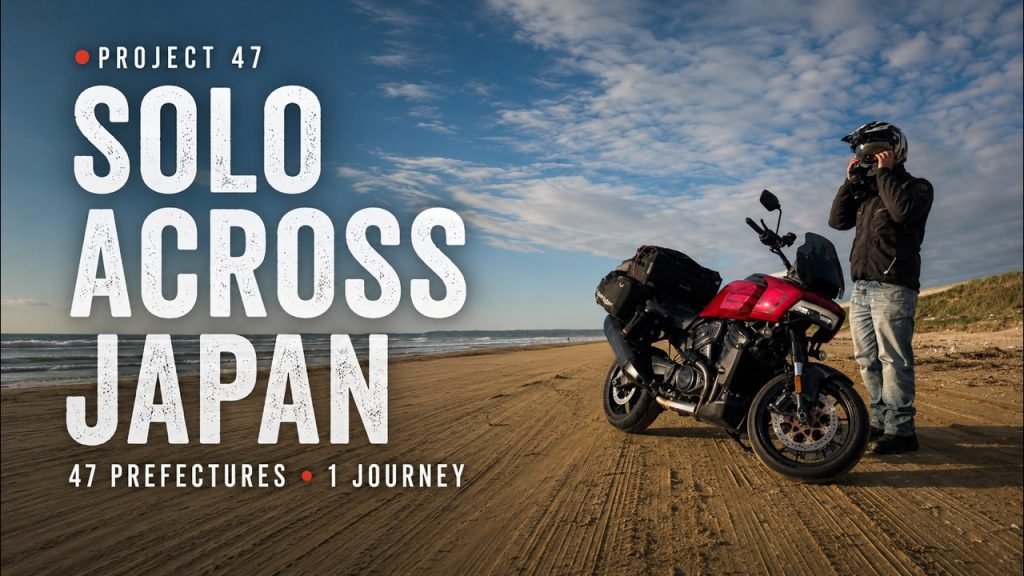
I used the Scrambler 400 X during Project 47, my solo motorcycle journey through every prefecture of Japan.
The motorcycle was not tested in a controlled environment. It became part of the journey—carrying me through Shikoku, over mountain roads, into bad weather and towards places I would never have reached by staying on the obvious route.
Watch the Scrambler 400 X in the Project 47 series:
One rider. All 47 prefectures. The Japan between the destinations.
Triumph Scrambler 400 X FAQ
Can the Triumph Scrambler 400 X go off road?
Yes. It handles gravel, dirt roads, hard-packed trails and moderate uneven terrain well. Triumph describes it as suitable for light off-road use, not motocross, enduro competition, jumping or extreme obstacles.
Does the Scrambler 400 X have an off-road mode?
Yes. On the motorcycle reviewed here, Off-Road mode disables ABS and traction control. It can only be selected while stationary and resets when the ignition is turned off.
How heavy is the Triumph Scrambler 400 X?
Triumph lists a wet weight of 179 kg. The motorcycle feels well balanced and generally lighter than that number suggests while moving or manoeuvring at low speed.
What is the seat height?
The official seat height is 835 mm. Shorter riders should sit on or test-ride the motorcycle before buying, but the narrow seat and balanced chassis make it easier to manage than the figure may suggest.
What fuel economy does the Scrambler 400 X achieve?
I generally recorded approximately 30 km/L during mixed real-world riding. Actual consumption will depend on road conditions, speed, luggage and riding style.
Is the Scrambler 400 X suitable for long trips?
Yes. Its upright riding position, fuel economy and ability to handle poor roads make it a capable lightweight touring motorcycle. Seat comfort and wind protection are the main limitations on longer journeys.
Is the 15-tooth front sprocket worth fitting?
It was for me. It made the throttle response feel smoother, lengthened the gearing and made the motorcycle more relaxed on the road. Riders who prefer the aggressive response of the standard gearing may choose to leave it unchanged.
What are the best first modifications?
For mixed-surface travel, I would prioritise upper and lower engine protection, a proper aluminium sump guard and the 15-tooth front sprocket. A high front mudguard is also useful in areas where mud and heavy rain are common.
Specifications and equipment can differ by country and model year. Confirm compatibility with Triumph or an authorised dealer before purchasing parts or modifying the motorcycle.