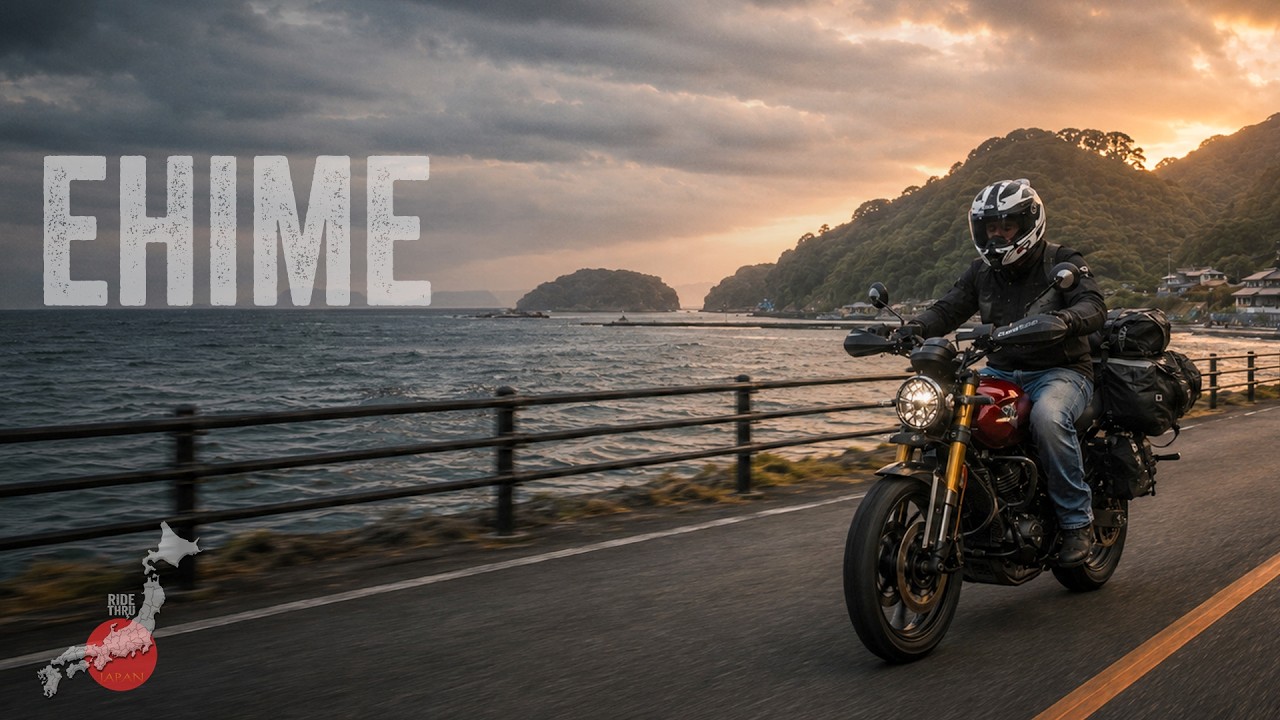
Ehime began with a storm.
Not a dramatic cinematic storm from a distance.
A real one.
The kind that pins you in place, batters your tent through the night, changes your plans, and reminds you very quickly that solo motorcycle travel doesn’t care what you had in mind.
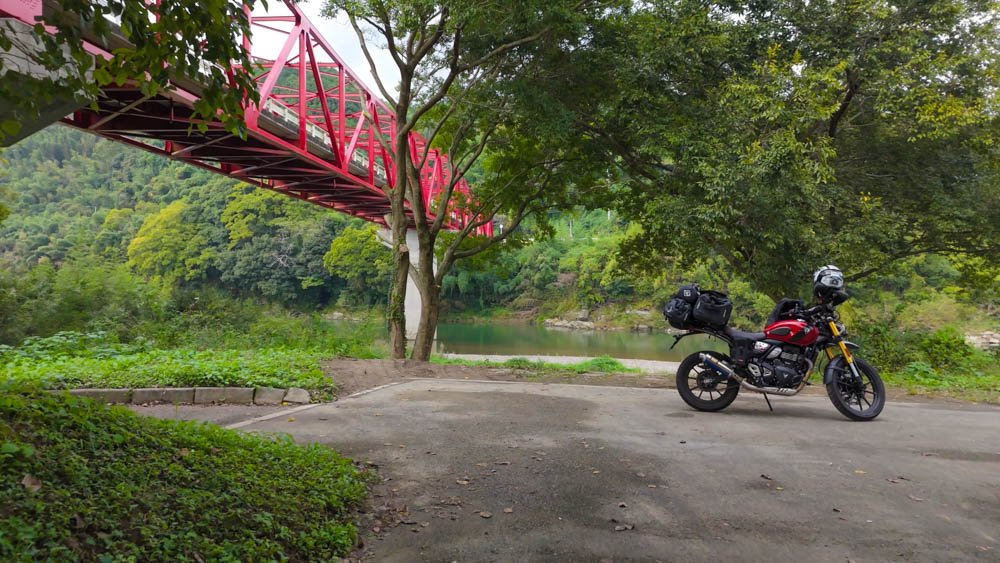
This was Episode 11 of Project 47, my solo motorcycle journey across all 47 prefectures of Japan. Crossing into Ehime meant entering Shikoku, a new island, a new phase of the journey, and a prefecture that turned out to be less about landmarks than about patience, redirection, and the people who appear when you least expect them.
Over three days, Ehime gave me gale-force winds, one of Japan’s great original castles, a cancelled dream road, a town I never planned to care about, and one of the most joyful chance encounters of the entire project.
Below is the journey across Ehime Prefecture.
Day 1 — Ferry to Shikoku and Racing the Storm
The storm that had pushed me out of Yamaguchi hadn’t really gone away.
It had slowed down.
But it was also intensifying.
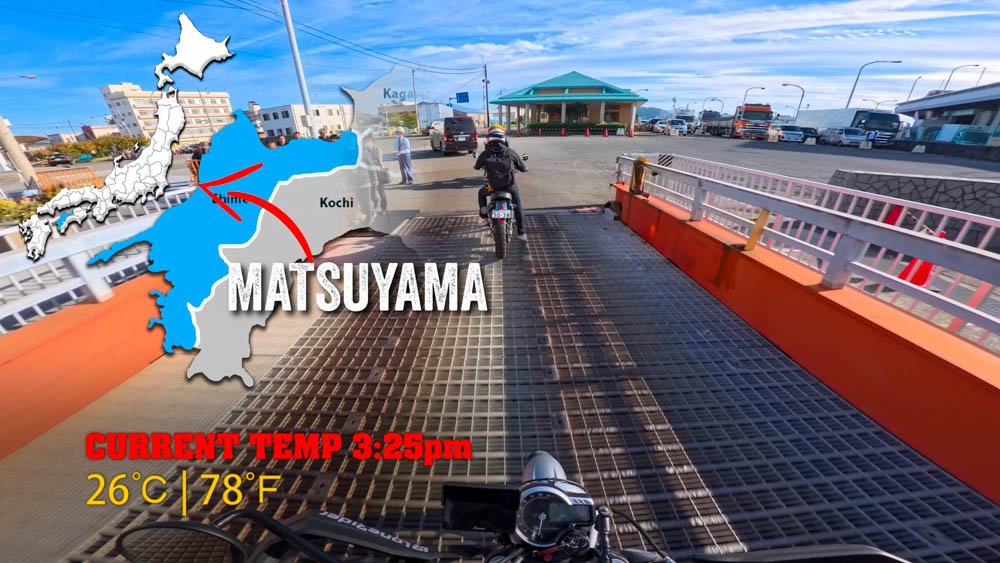
I made the call to move anyway, catch the ferry, and get into Ehime before it fully arrived.
That crossing mattered.
It marked the start of the 11th prefecture of the journey and the beginning of a whole new region — Shikoku.
On the ferry I ended up talking with Inoue-san, a local rider with an SR500 and exactly the kind of easy warmth that seems to show up again and again on this trip. He gave me a few pointers about places to visit around town, and even before I’d set a tire on Ehime properly, the prefecture had already introduced me to one of its people.
That felt like a good sign.
The weather, unfortunately, felt like the opposite.
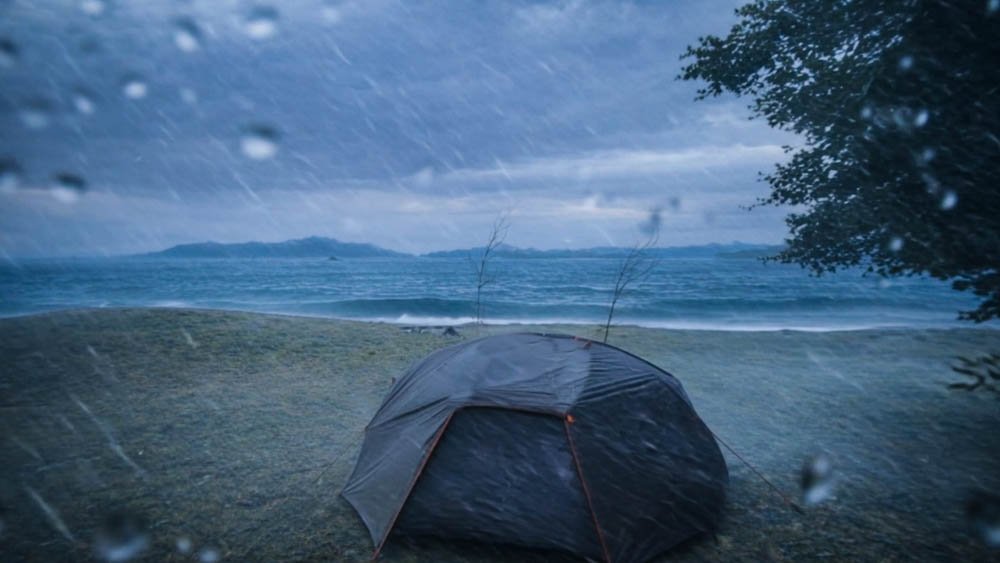
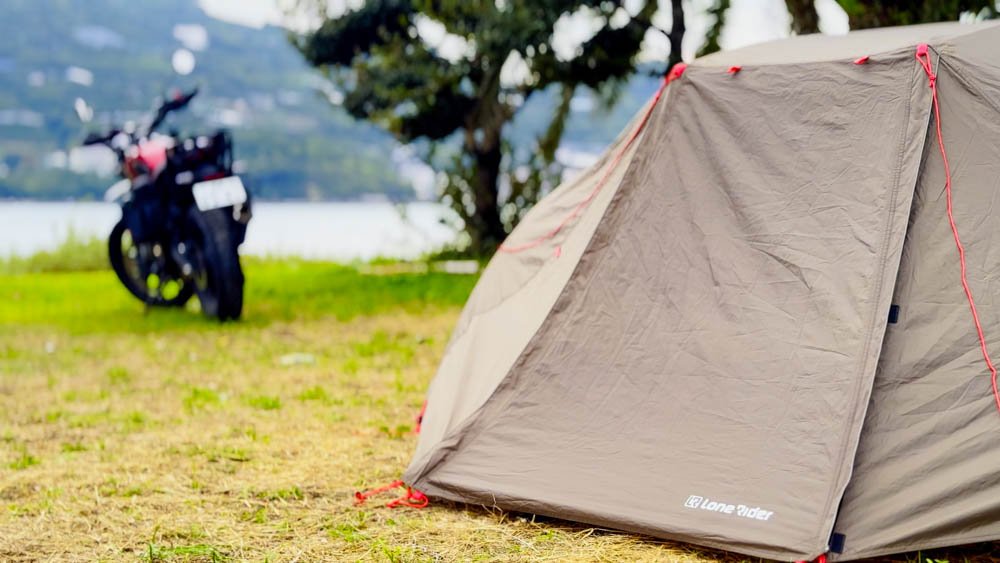
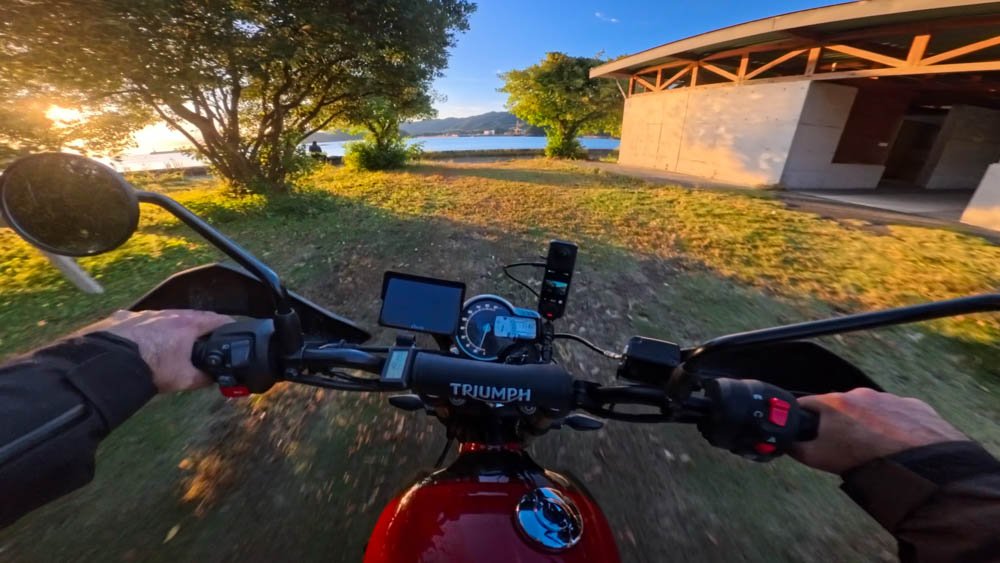
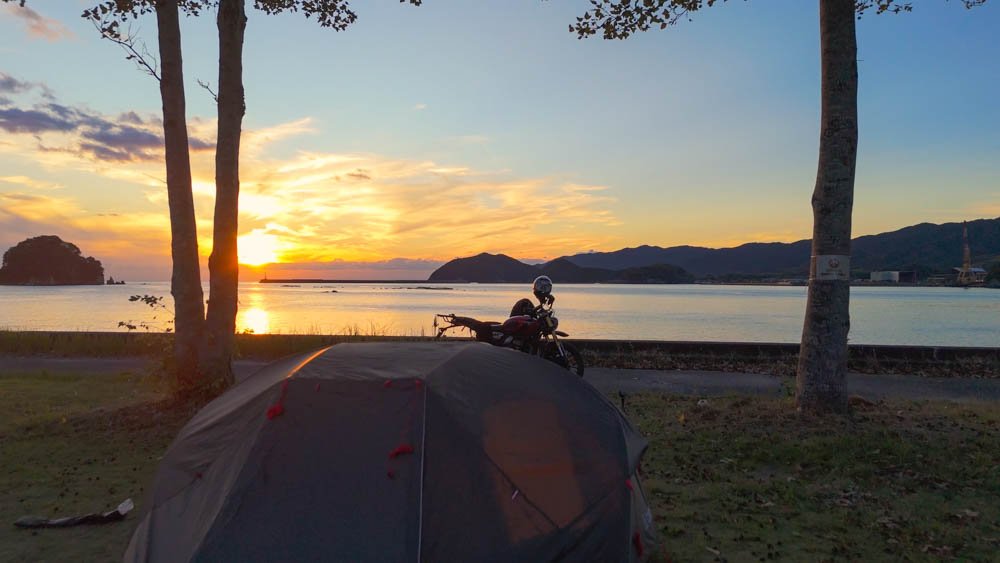
Knowing the storm would blow in hard from the northwest, I chose a campsite on the east side of a peninsula, hoping the land itself would give me some shelter.
At first, it seemed like a good choice.
The sunset was beautiful.
The campsite was empty.
The mood, at least for a while, was calm.
Then the wind shifted.
Night 1 — The Tent, the Wind, and a Very Long Night
The forecast had said the wind would hit from one direction.
Reality had other ideas.
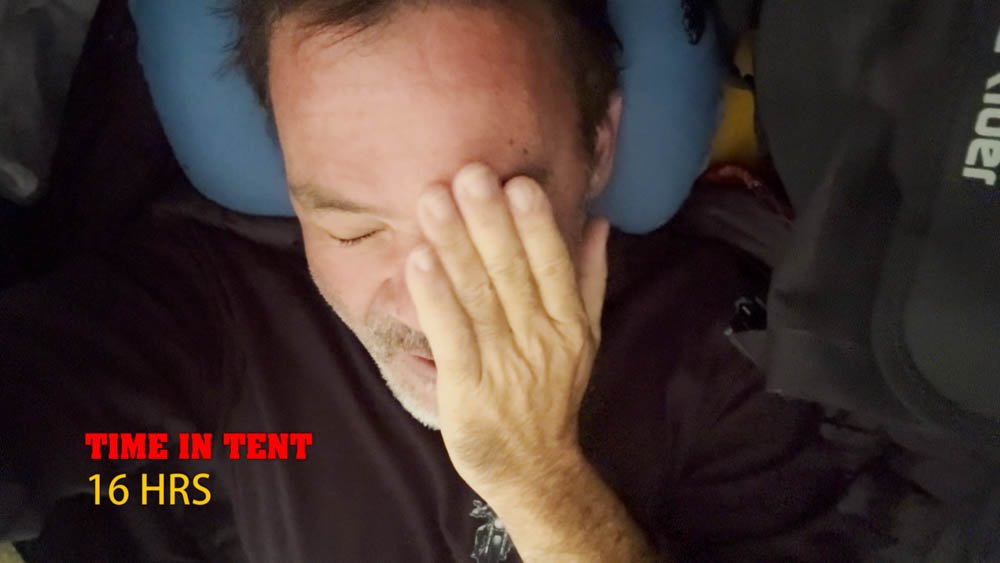
Instead of crossing the hill behind me, it started tearing sideways across the peninsula, hammering the tent with gusts around 50 kilometers an hour.
Suddenly I wasn’t relaxing anymore.
I was outside retightening guylines, checking anchor points, trying to make sure the whole setup stayed together.
It was one of those situations where you know you shouldn’t really be camping there in those conditions, but by the time the truth reveals itself, you’re already committed.
And then it became exactly what those nights become.
Uncomfortable.
Noisy.
Restless.
Long.
At one point I started packing things mentally in case I had to abandon the tent entirely.
It wasn’t fun.
At all.
That was Ehime’s opening move.
A reminder that sometimes the road doesn’t test your riding first.
It tests your ability to endure.
Day 2 — Breaking Camp and Trying to Reset
By the time the sun finally began creeping back through the clouds, I had reached the point where I didn’t even want to think anymore.
I just wanted out.
My body was stiff from being stuck inside the tent for so long, and even before I had navigation set up, I was already packing.
The road out was slippery and sketchy, but anything felt better than staying there.
The best thing about a day starting badly is that it usually has room to improve.
And in this case, it did.
A coffee and a chocolate chip cookie helped more than they had any right to.
With that small reset, I pointed the bike toward Matsuyama.
The plan was simple:
Go to the castle.
Stop at the café my wife wanted me to visit.
Let the day rebuild itself from there.
Matsuyama Castle — A Strong Comeback
By the time I got into Matsuyama, the day had already started turning around.
The city was beautiful in that way some Japanese cities are when they’re framed by mountains and old history rather than pure sprawl. There was even a little bit of early-morning off-roading and some rubberized mats on the approach, just enough to keep things interesting.
The small café my wife wanted me to stop at was tucked into an old bookstore, and from there it was time to head up to the castle.
The chairlift to Matsuyama Castle moves at an almost comically slow pace, but once you get up there, it’s worth it.
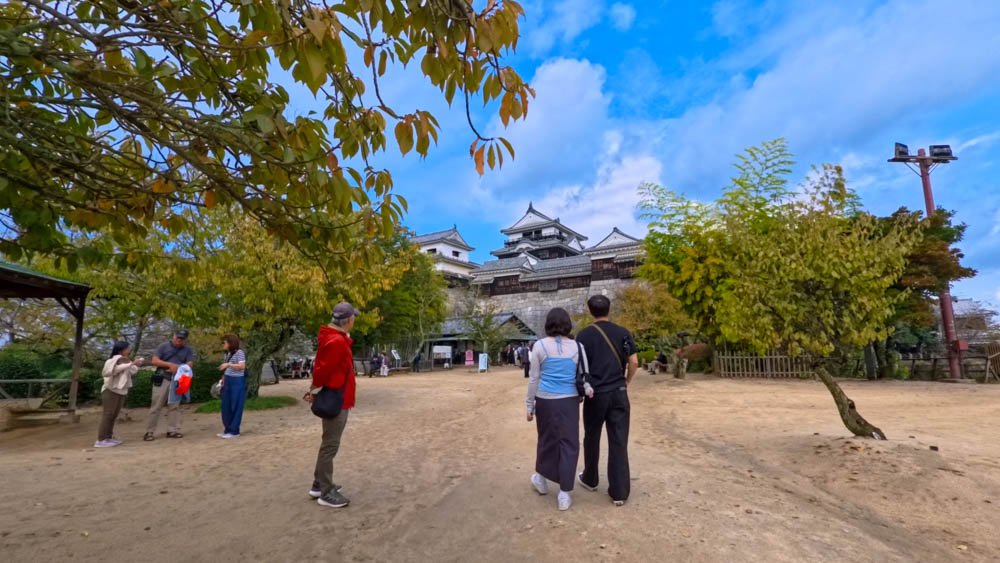
Matsuyama Castle is one of Japan’s 12 original castles, which means it still carries the real weight of time rather than the feeling of reconstruction. Built between 1602 and 1628, it sits above the city with panoramic views in every direction, and the whole complex feels layered and complex in a way many castles don’t.
It’s one of the most interesting castles in the country.
And after the previous night’s storm, it felt like exactly the kind of place I needed.
Solid. Elevated. Restoring.
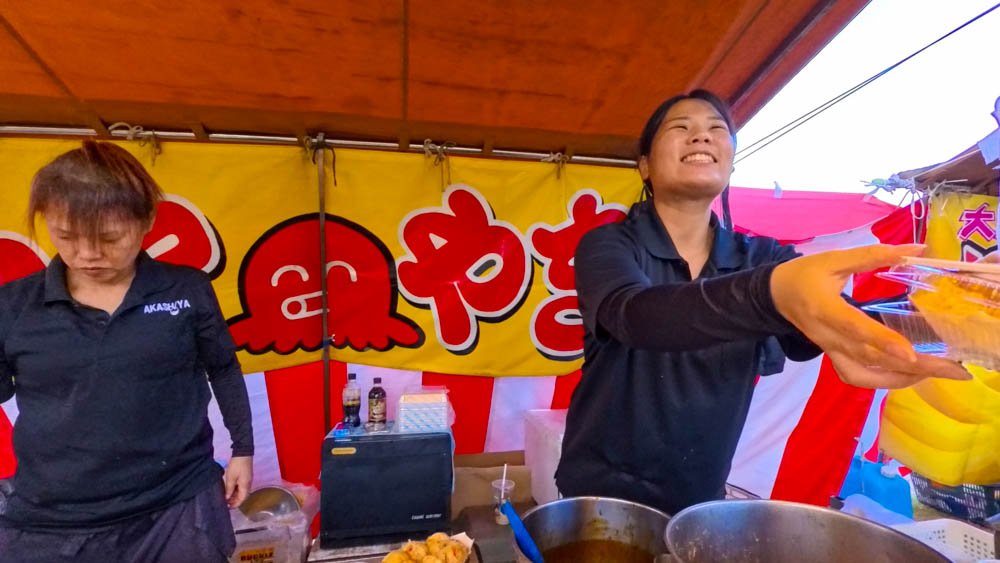
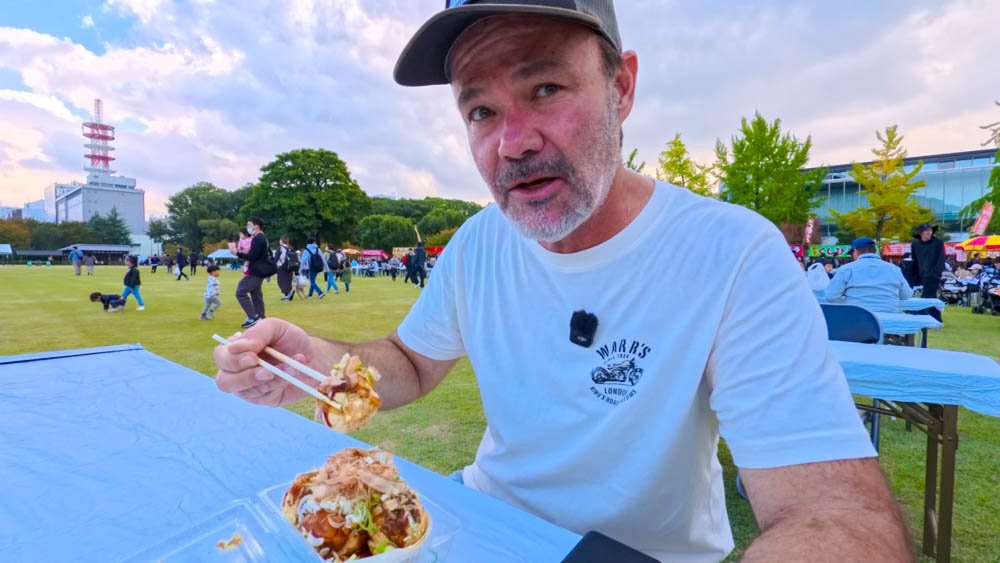
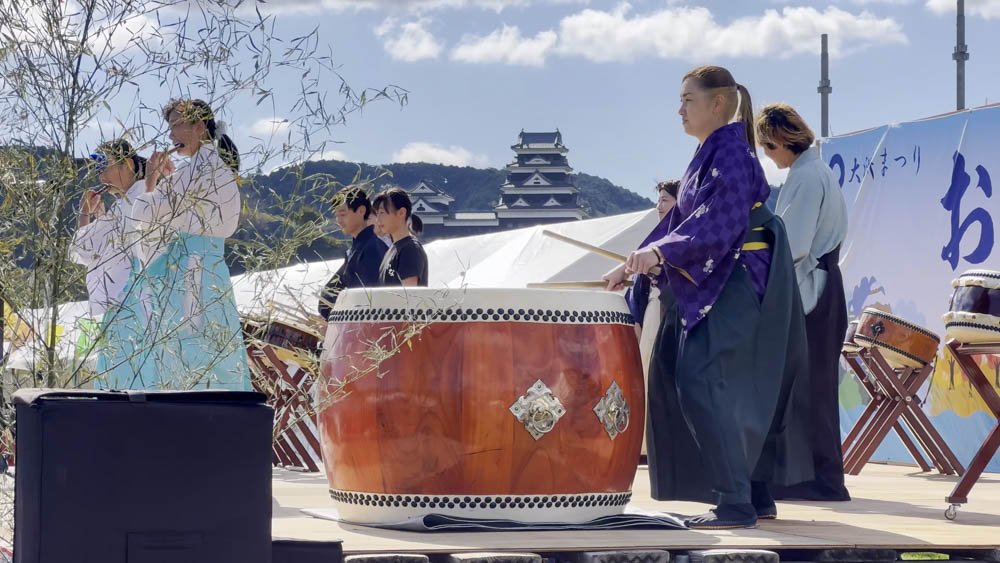
As I came down from the castle, I found a small local matsuri happening at the base and grabbed some takoyaki.
Simple food, good timing, a little local life.
The kind of thing that keeps a day from becoming just a list of sights.
Day 2 Evening — The Coast Road and the Search for Shelter
Even after the castle, I was still carrying the fatigue from the storm.
I didn’t really have the energy to chase too much.
So I made a practical decision.
Ride the coast.
Find a campsite early.
Rest properly.
Save the energy for tomorrow.
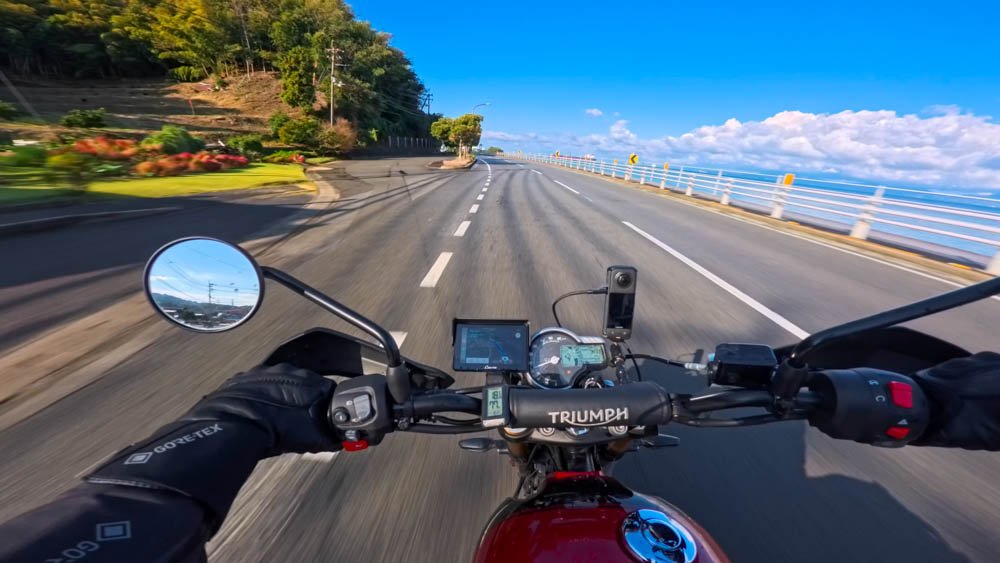
That coastal ride was beautiful.
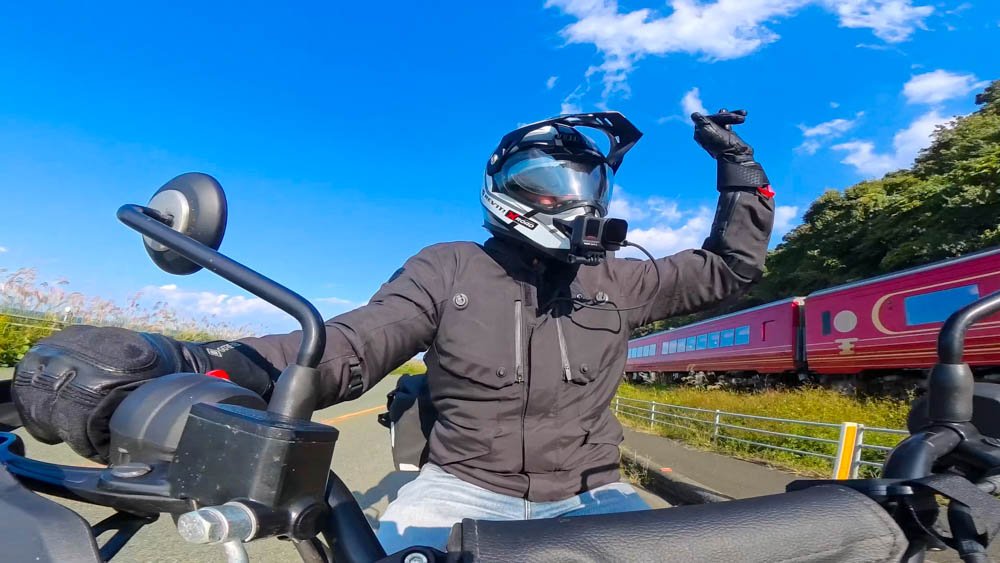
Train passengers waving.
Funky little towns.
The road wrapping around the bay.
For a while it felt like the day had fully recovered.
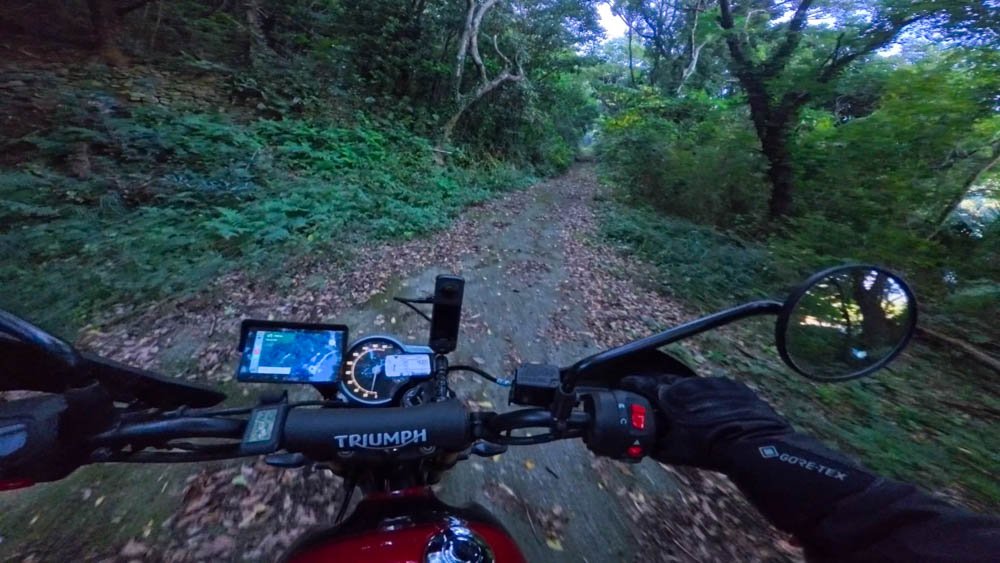
Then I found myself following a route that began to look more adventurous than I had intended.
At first it was just a narrow road.
Then it became a sketchy road.
Then it became the kind of track where you stop, stare up at it, and say out loud that you definitely do not want to go that way.
Google Maps, as usual, was trying to shave 30 seconds off my life by sending me into nonsense.
Eventually I found a spot and called it.
No perfect campsite.
No dramatic view.
Just somewhere workable.
And sometimes workable is enough.
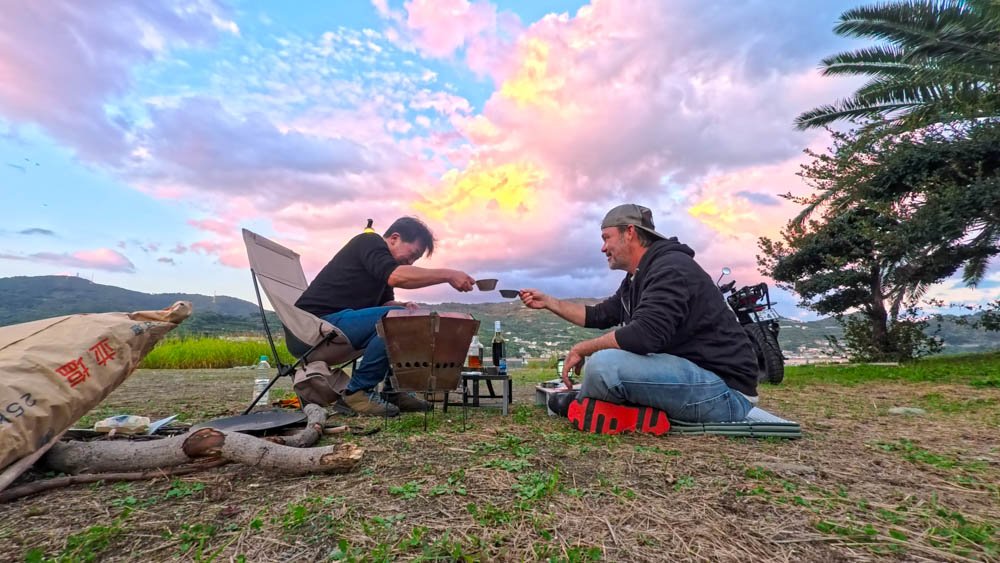
After I got the tent up, my new neighbor, Yukimasa-san, came over and invited me to share a fire, a drink, and some conversation.
That sounded perfect.
And it was.
The day ended the way good road days often do — not with some huge grand finale, but with a human moment.
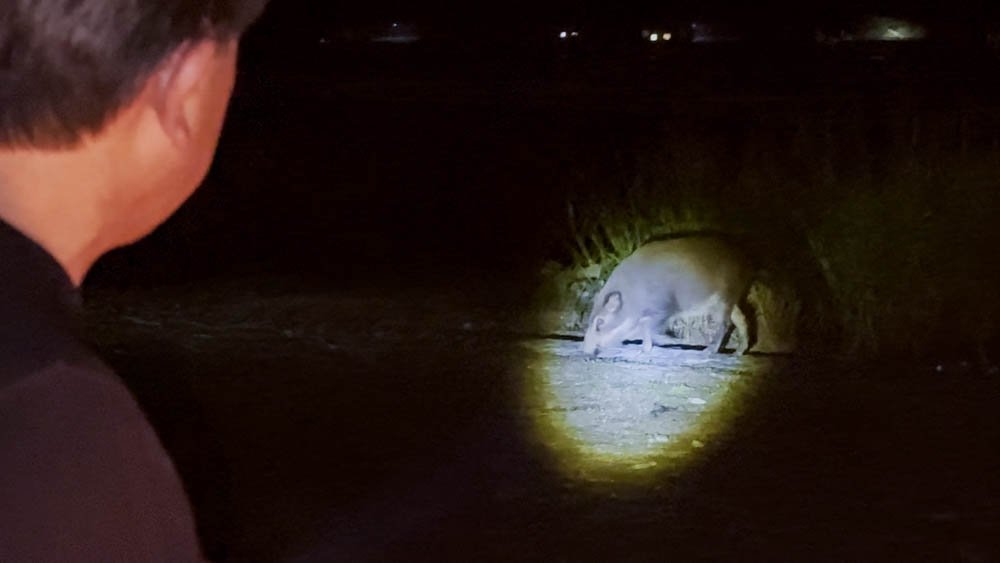
Of course, the wild pig that kept returning to the tent through the night was less welcome.
At one point it even got its nose under the rainfly.
So that was fun.
Day 3 — The Dream Road That Wasn’t
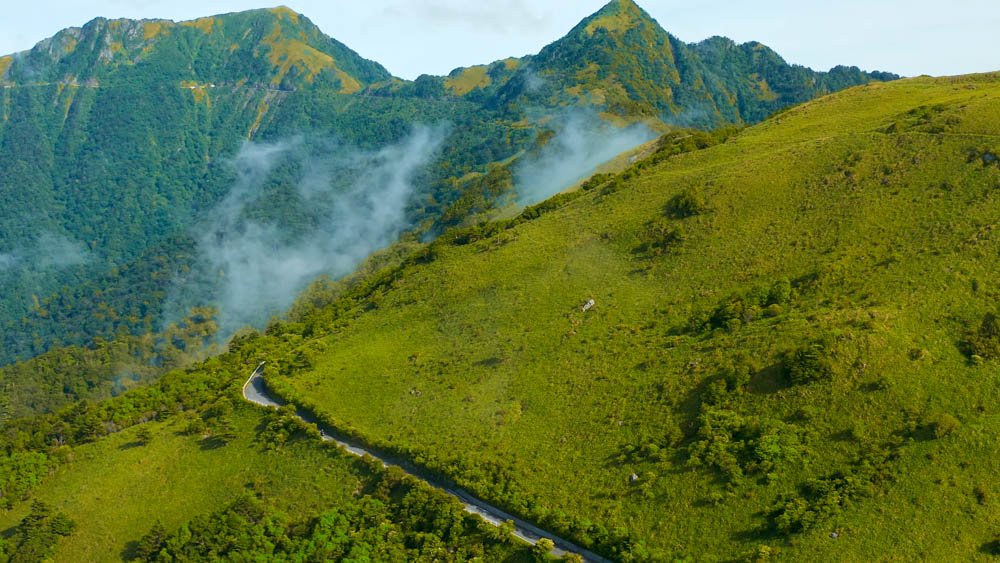
One of the biggest reasons I had wanted to come to Ehime was the UFO Line.
It’s one of those roads that gets into your imagination before you ever ride it — isolated, high in the mountains, long, exposed, challenging, exactly the kind of route that speaks to the part of you that rides for the test as much as the scenery.
So when Yukimasa-san told me it was closed due to landslides, it hit hard.
I was properly disappointed.
But there was nothing to do about it.
And that’s where Ehime changed.
Instead of forcing a new objective, I fell back on a different kind of plan.
No-plan.
Just head east and see what the road offers.
And that turned out to be the right decision.
The Garage That Changed the Day
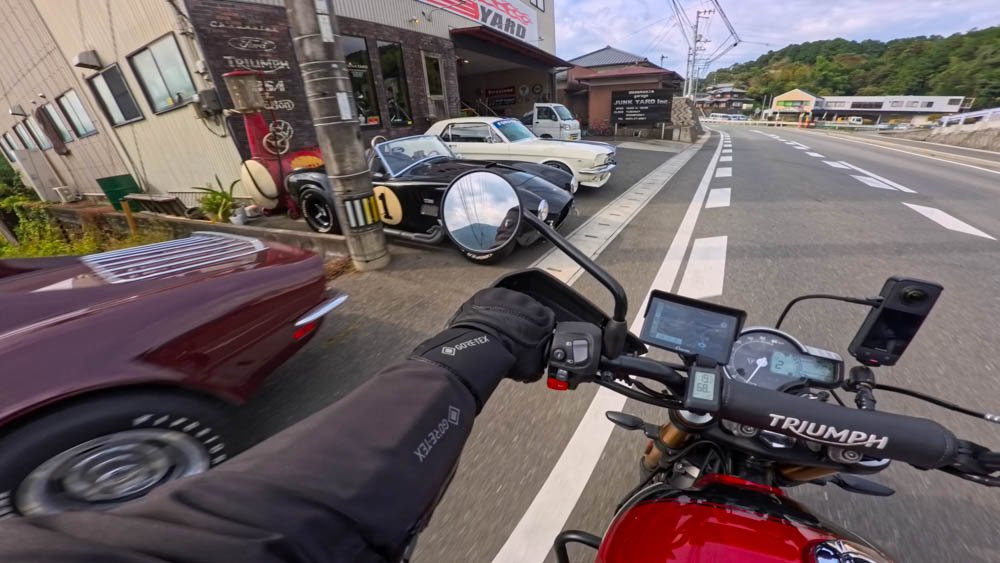
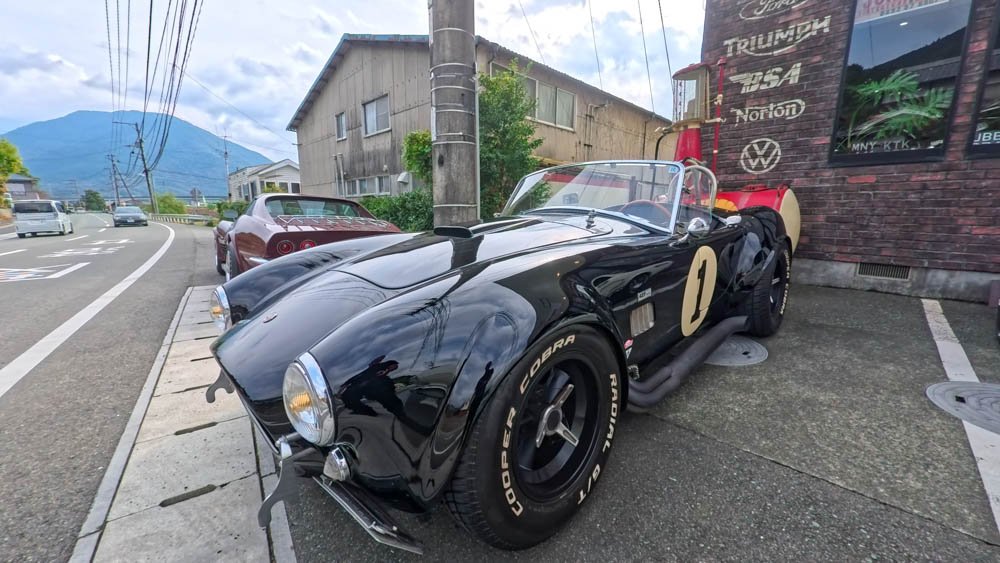
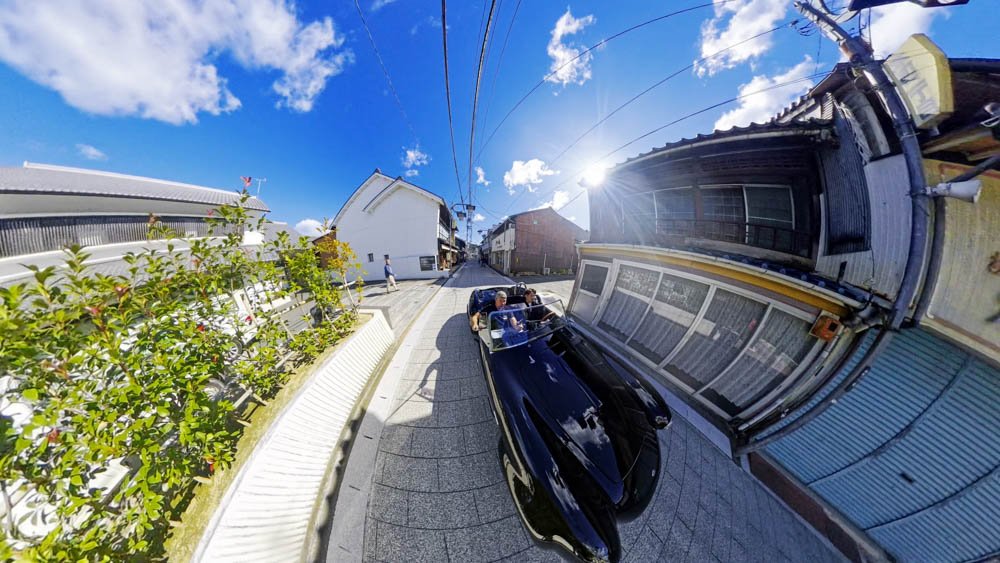
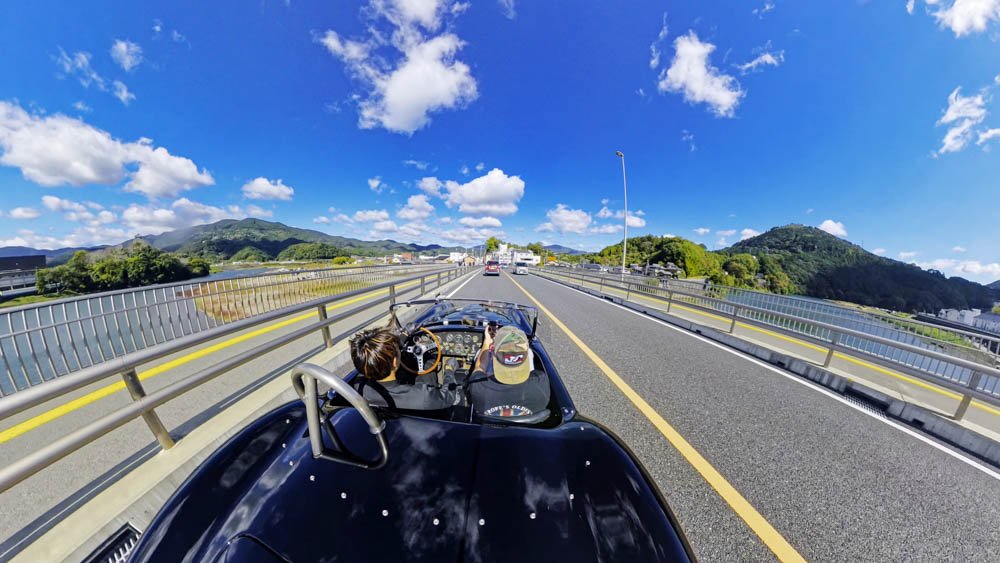
While riding towards a pin I had dropped up over the mountains I saw something beautiful, a Shelby Cobra, Mustang and a Stingray parked outside a garage.
I made the best U-Turn of my life.
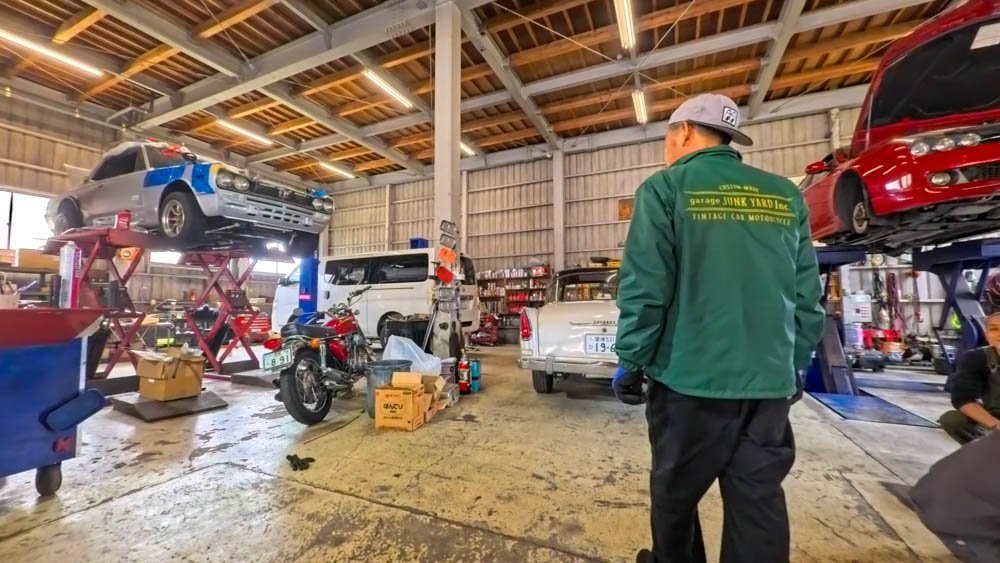
What I had stumbled on was the kind of place you never find by planning too hard.
Old American muscle cars.
Classic motorcycles.
A Cobra.
A Corvette.
A Mustang.
A Stingray.
A CB750.
A Norton.
A Panhead.
Just sitting there in rural Japan like some kind of alternate universe garage dream.
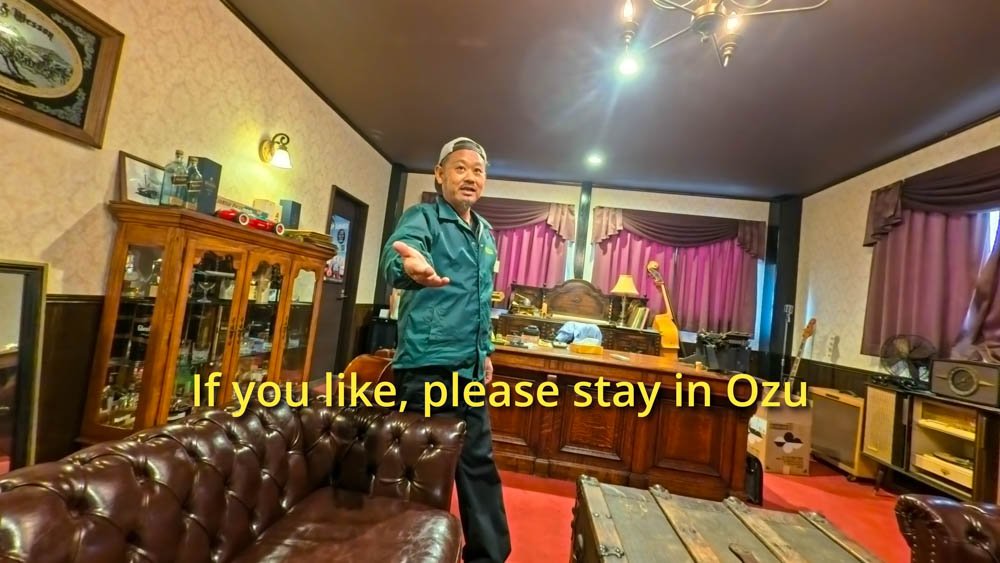
And at the center of it all was Inoue-san.
The same guy I had met on the ferry.
That alone would have made the encounter feel strangely perfect.
But it got better.
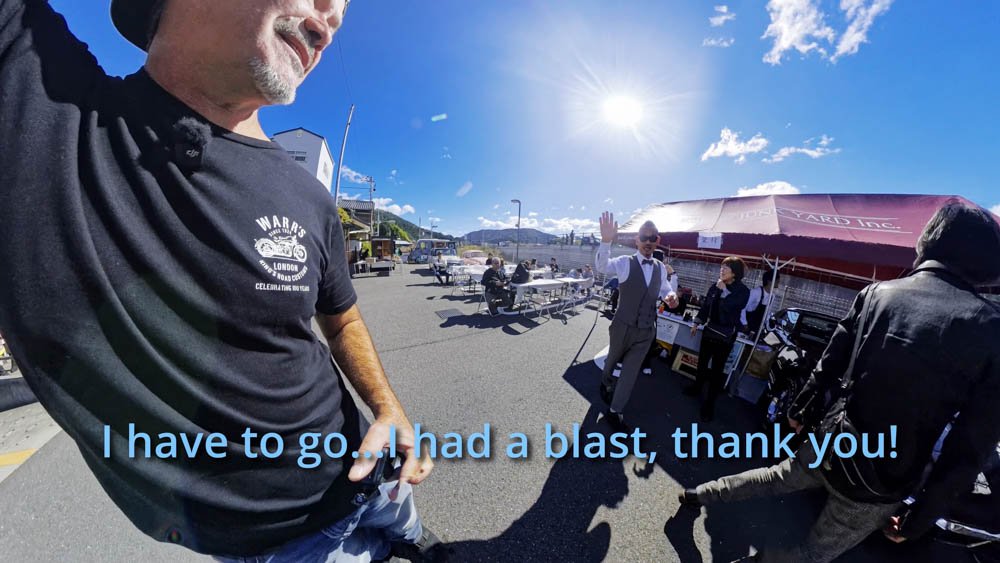
For the last 20 years, every Christmas Eve, he has taken one of those classic cars out and delivered presents to children purely out of his own heart. Completely voluntary. No big self-promotion. No angle. Just generosity.
And the next day they were running rides in those cars for people who would never otherwise get to experience them.
Again, just to give people joy.
That kind of thing matters.
You can feel it when you meet someone like that.
Suddenly the cancelled road didn’t matter nearly as much.
The day had opened up in a completely different direction.
Ozu — The Place I Never Thought About
The more time I spent there, the clearer it became that I had found one of the true surprises of the whole trip.
I had looked at the map of Ehime over and over.
And never once had I thought, I need to come to Ozu.
It barely registered.
And yet there I was, in what had unexpectedly become one of my favorite places so far.
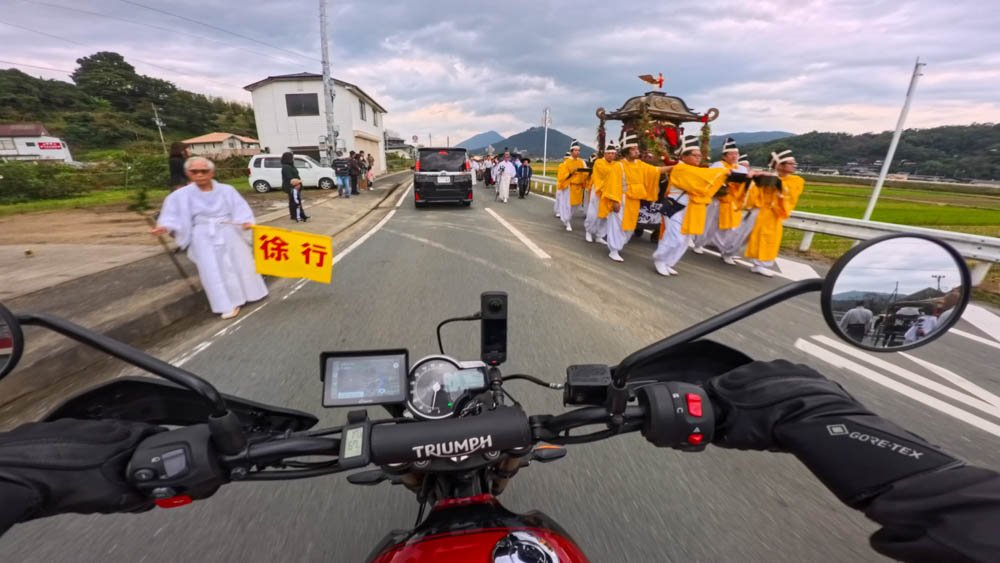
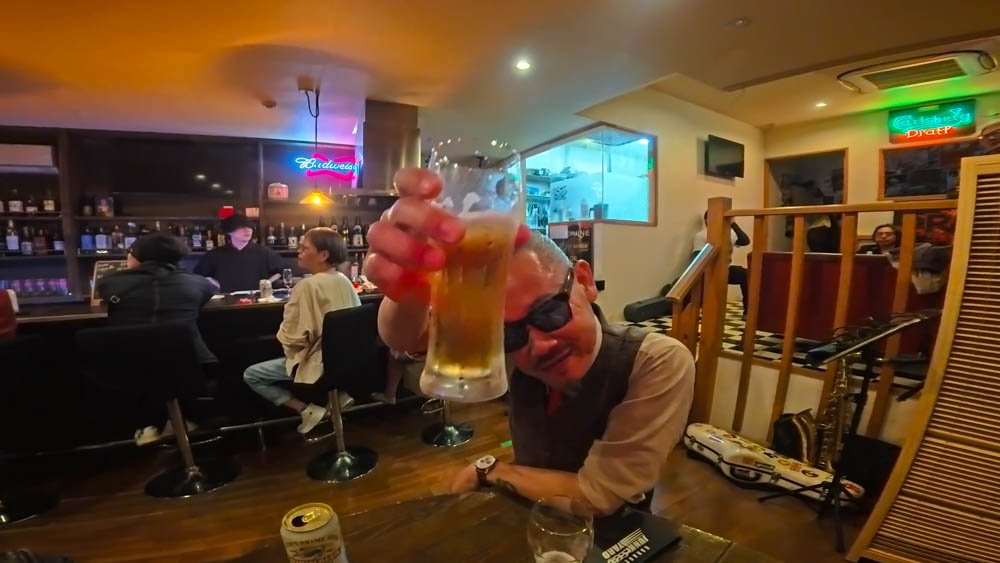
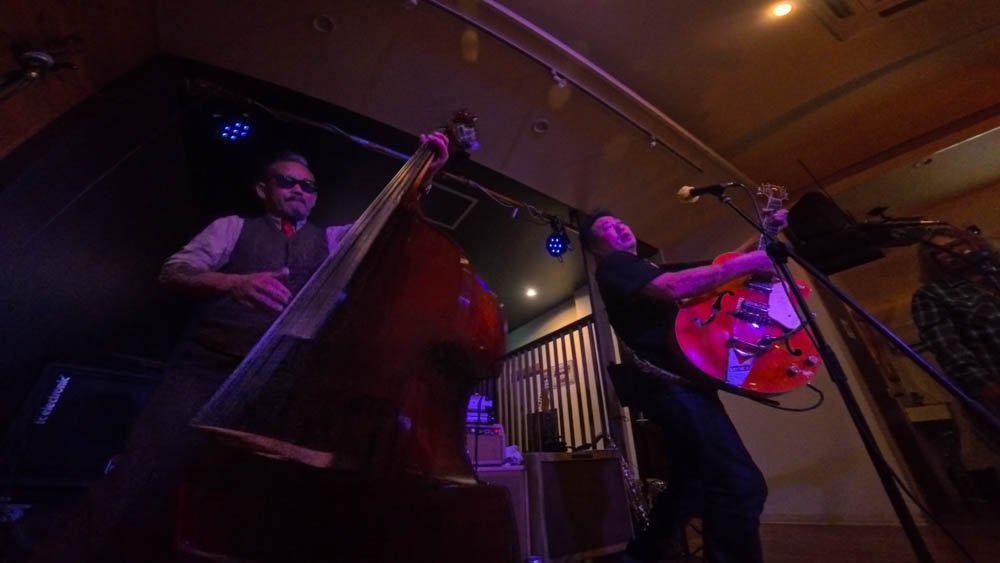
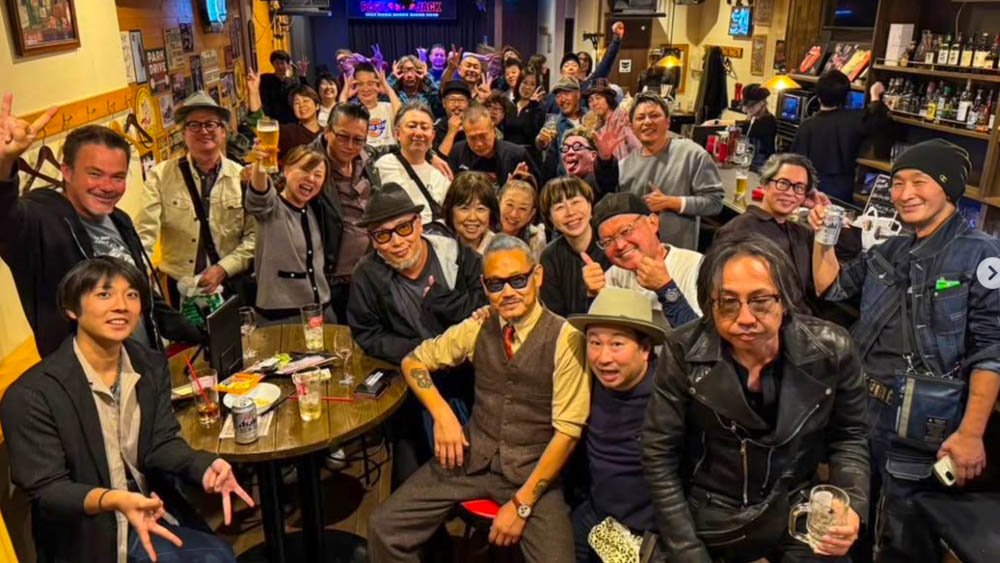
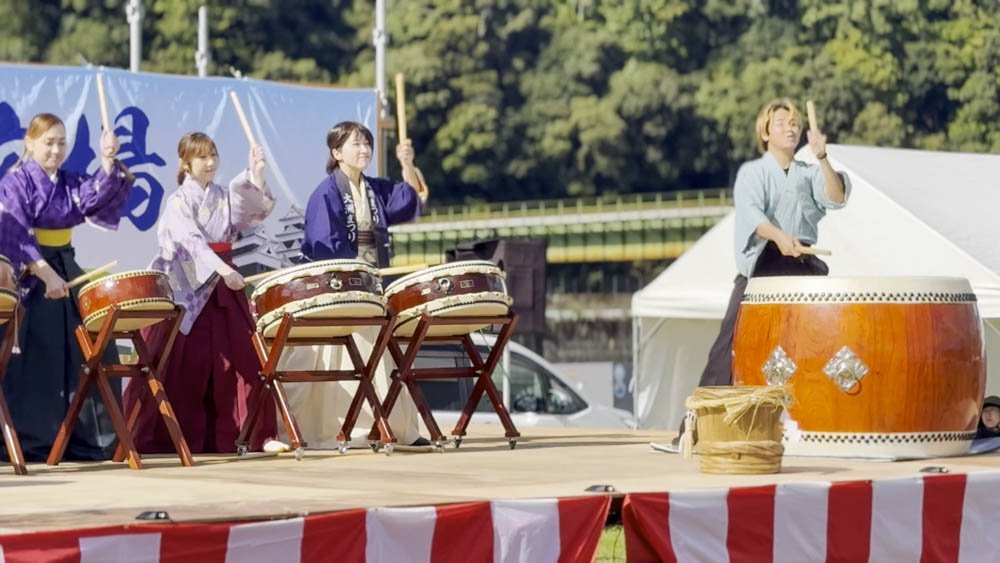
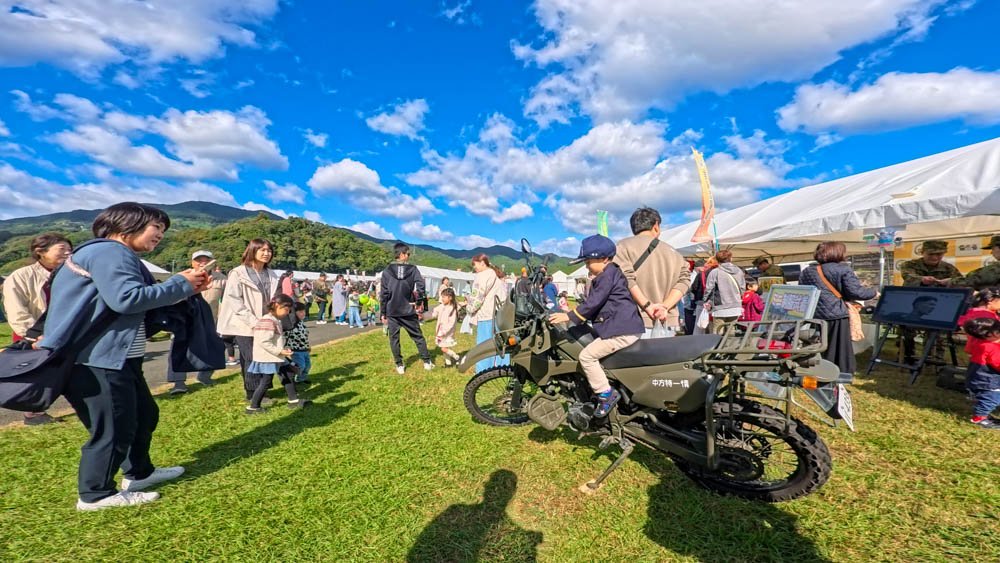
There was a matsuri happening.
The atmosphere was warm and alive.
The people were generous.
And then came the moment I didn’t want to admit mattered as much as it did.
A ride in the Cobra.
That was one of those pure joy moments that cuts through everything else.
Simple, ridiculous, unforgettable.
By the time I left, it was genuinely hard to put that town in the rearview mirror.
Ehime had stopped being about what I thought I was coming to ride.
It had become about what I had found instead.
Southbound — The Emotional High of a Great Day
Riding south after leaving Ozu, I was in that strange state that only follows truly good days on the road.
A little hungover, yes.
A little tired, definitely.
But carrying that satisfying full-body buzz that comes when a day has delivered far more than you expected.
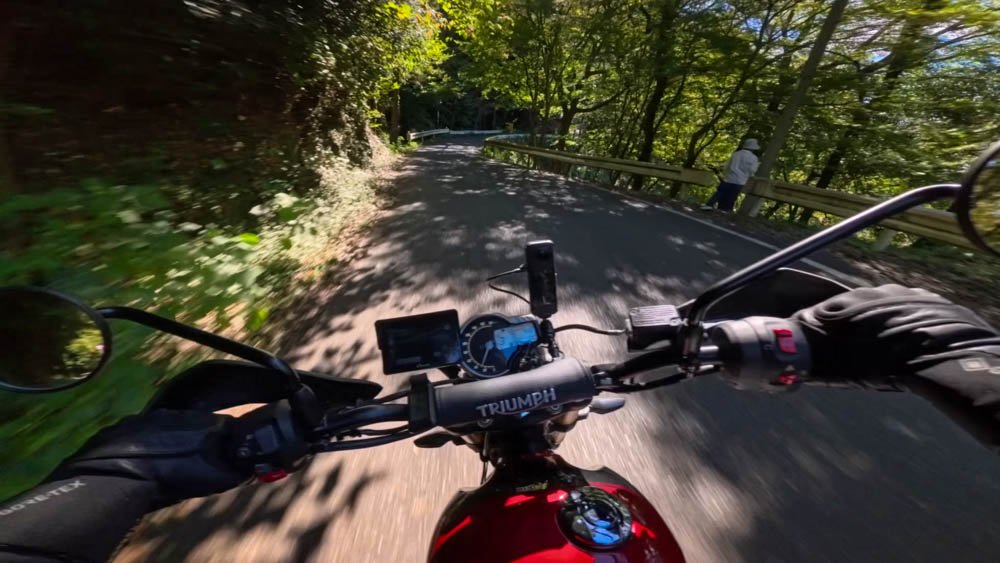
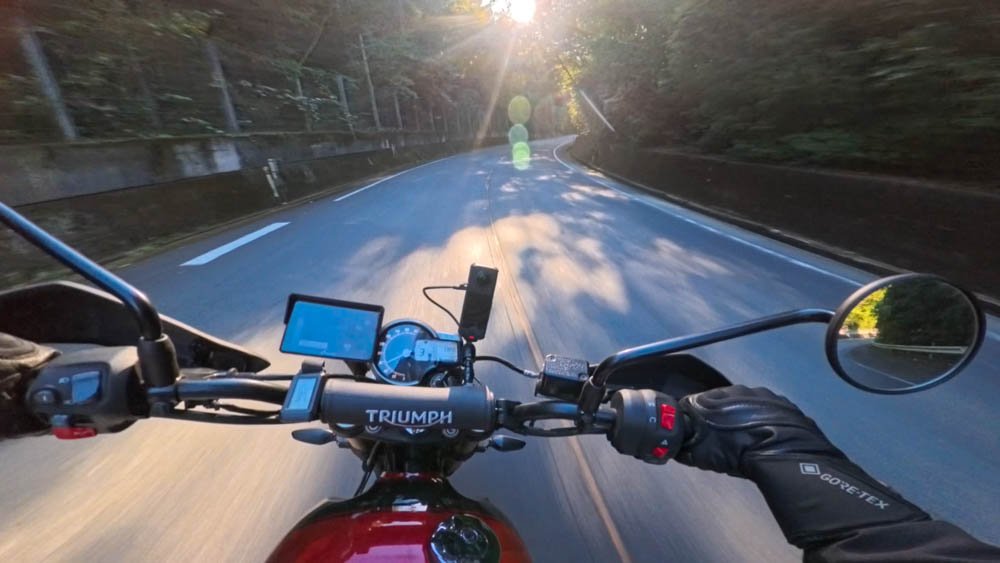
The mountain roads were beautiful.
The prefecture kept opening.
And I found myself thinking that Ehime had blown me away less through its headline attractions than through its people.
That is a powerful thing for a place to do.
Still, the ride wasn’t over.
I wanted to make one more stop before getting near the Kochi border.
The Shiden-Kai Museum.
The Shiden-Kai Museum — A Quiet Final Stop
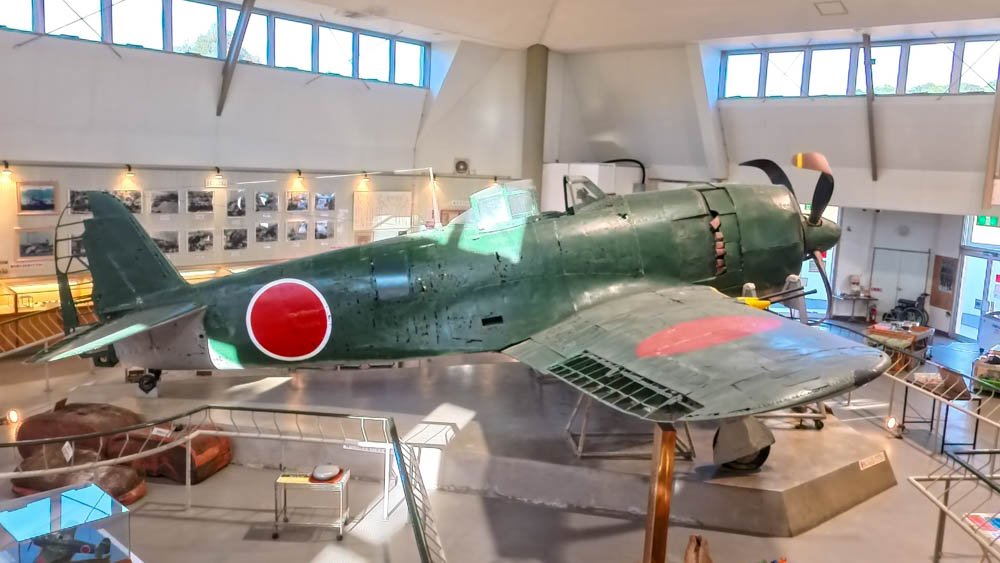
The museum in Ainan holds one of only four remaining Shiden-Kai fighter aircraft in the world.
The plane on display had made an emergency water landing off the coast in 1945 and lay on the sea floor until local residents helped salvage it decades later.
Standing there looking at it, it had that same quality certain wartime relics in Japan often carry — not glorified, not stripped of meaning, just suspended in history.
It was a quieter stop than the Cobra and the garage and the matsuri.
But it felt right as a final major point in the prefecture.
A little gravity before the day wound down.
After that, all that remained was the final ride toward camp near the Kochi border.
And by then, I could feel the fatigue catching up with me.
Not the bad kind.
The earned kind.
The kind that tells you the day was worth it.
What Ehime Actually Gave Me
Ehime began with a storm that broke my momentum.
It felt like one of those prefectures that might never quite get going.
The elements had their say first.
Then the plans fell apart.
Then the road I really wanted was closed.
By most neat travel-story logic, it should have been a frustrating chapter.
Instead, it became one of the most meaningful ones so far.
Because the script changed.
Because I stayed open.
Because one canceled road led to a town I never planned to care about, people I didn’t expect to meet, and one of the purest joy days of the entire series.
That was Ehime.
The storm.
The castle.
The Cobra.
And somewhere between all of those, a reminder that losing direction for a moment is not the same thing as losing the journey.
Next stop: Kochi Prefecture.